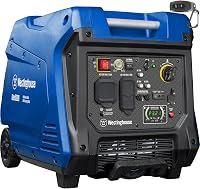
Champion vs Westinghouse Generators: Which to Buy? (November 2026)
Pick the Westinghouse iGen4500 for most buyers, because 3900 rated watts, remote start and 52 dBA noise cover RV trips and home backup in one unit. Choose the Champion 4000W Dual Fuel if propane flexibility and a 51.8 lb body matter more than higher running watts.
On this page (10 sections)
- Champion vs Westinghouse: the quick verdict
- How the two generators compare side by side
- Which generator gives you more usable power?
- Which is easier to start and move?
- Which one suits propane and long storage?
- Noise, safety and clean power
- Who should buy the Westinghouse iGen4500?
- Who should buy the Champion 4000W Dual Fuel?
- How to choose between Champion and Westinghouse generators
- Verdict: which generator should you buy?
Pick the Westinghouse iGen4500 for most buyers, because 3900 rated watts, remote start and 52 dBA noise cover RV trips and home backup in one unit. Choose the Champion 4000W Dual Fuel if propane flexibility and a 51.8 lb body matter more than higher running watts.
The champion generator vs westinghouse generator question usually comes down to two things: how much power you need at once, and which fuel you want to carry. This comparison keeps the focus on specs and the way each unit is built.


Champion vs Westinghouse: the quick verdict
The Westinghouse iGen4500 wins overall for most readers. It scores 8.9 against 8.8 for the Champion, and the gap comes from running watts, starting method and noise rather than brand loyalty.
At 3900 rated watts the Westinghouse can carry a 30 amp RV load with more headroom. Its key fob remote start also means you don't walk out in the rain to pull a cord.
The Champion answers a different need. It switches between gasoline and propane, weighs 51.8 lb instead of 104.7 lb, and carries a carbon monoxide shutoff that cuts the engine when CO builds up.
If you mostly camp with a small trailer and want a fuel you can store for a year, the Champion is the better buy. If you want one generator that covers a trailer and a few home circuits, take the Westinghouse.
How the two generators compare side by side
The Westinghouse leads on output and quiet running, while the Champion leads on fuel choice and weight. The table below puts the main specs next to each other.
| Feature | Westinghouse iGen4500 | Champion 4000W Dual Fuel |
|---|---|---|
| Running watts | 3900 (gas) | 3000 (gas), 2700 (propane) |
| Peak watts | 5000 | 4000 |
| Starting | Remote fob, electric, recoil | Recoil with EZ Start Dial |
| Noise | As low as 52 dBA | 64 dBA at 23 ft |
| Weight | 104.7 lb | 51.8 lb |
| Fuel | Gasoline | Gasoline or propane |
| Run time | Up to 18 hr on 3.4 gal | Up to 10 hr gas, 25 hr propane |
| THD | Under 3% | Under 3% |
| CO shutoff | Gasoline only, no CO shutoff | CO Shield |
| Warranty | 3-year limited | 3-year limited |
Both units are inverters, so both produce clean power under 3% total harmonic distortion. That matters if you run a laptop, a TV or a trailer control board.
| Product | Best for | Rated watts | Peak watts | Weight | Our score |
|---|---|---|---|---|---|
| Westinghouse iGen4500 5000W Inverter | overall | 3900 | 5000 | 104.7 lb | 8.9 |
| Champion 4000W Dual Fuel RV Inverter | propane users | 3000 gas, 2700 propane | 4000 | 51.8 lb | 8.8 |
Which generator gives you more usable power?
The Westinghouse gives you roughly 900 more running watts on gasoline, and that is the biggest single difference between these two. Running watts, not peak watts, decide what stays on for hours.
The iGen4500 holds 3900 watts continuously and surges to 5000 for motor starts. The Champion holds 3000 watts on gasoline and 2700 on propane, with a 4000 watt surge.
A 15,000 BTU RV air conditioner draws about 1500 to 1700 running watts with a much higher startup spike. Either unit can start one, but the Westinghouse leaves more room for a fridge, lights and a microwave at the same time.
On propane the Champion drops another 300 watts. Plan your load list around 2700 watts if you camp on propane, and around 3000 if you use gasoline.
What 3900 watts runs at home
During a power cut, 3900 running watts can carry a fridge, a furnace blower, several lights, a router and a phone charger without strain. A well pump or a space heater pushes you closer to the ceiling.
The Westinghouse adds two USB outlets and a 5-20R duplex household outlet alongside the TT-30R. Its rotating display shows fuel level, output, remaining run time and voltage, so you can watch the load as you add appliances.
The Champion has the same household duplex and TT-30R setup with clean output under 3% THD, plus a 12V automotive-style outlet. Its ceiling simply sits lower.
Which is easier to start and move?
The Champion is far easier to lift into a truck bed; the Westinghouse is easier to start once it is parked. Weight and starting method pull in opposite directions here.
The Champion weighs 51.8 lb and measures 17.9 x 11.7 x 19.7 inches. One person can lift it onto a tailgate or into a shed without a ramp.
The Westinghouse weighs 104.7 lb and adds a telescoping handle and wheel kit. It rolls like a suitcase on flat ground, but stairs and gravel still need a second person or a ramp.
Starting differs just as sharply. The Westinghouse has a key fob remote, push-button electric start and a recoil backup, with auto choke for cold mornings.
The key fob and a battery charger ship in the box, so the remote is ready on day one.
The Champion uses a recoil pull and its EZ Start Dial to switch fuels, plus Cold Start Technology for cold weather. There is no electric start or remote on this model.
If you set the generator up alone at night or in rain, the remote matters. If you load and unload it at every stop, the weight matters.
Which one suits propane and long storage?
The Champion wins this category outright, because it is the only one of the two that runs on propane. That changes how you store fuel and how long a tank lasts.
A 20 lb propane tank gives the Champion up to 25 hours at 25% load. A full 1.54 gallon gasoline tank gives up to 10 hours on the same unit.
Propane has no ethanol to go stale and no carburetor gumming over months of sitting. For a generator that lives in a shed and comes out twice a year, that is a real advantage.
The Westinghouse runs on gasoline only, with a 3.4 gallon tank and up to 18 hours at low load. It makes up for the single fuel with a larger tank and an Economy Mode that varies engine speed to match the load.
For more brand routes that lean on propane, our Westinghouse vs DuroMax generator breakdown covers how the two handle fuel and load.
Noise, safety and clean power
The Westinghouse is rated quieter at 52 dBA, and the Champion adds a carbon monoxide auto shutoff. Both make power clean enough for sensitive electronics.
Westinghouse rates its unit as low as 52 dBA, which is about the level of a quiet conversation. That figure depends on load and distance, but it points to a design built to keep campground neighbors calm.
Champion rates its inverter at 64 dBA from 23 feet. Under an open trailer awning that is noticeable, though still far below an open-frame contractor unit.
The Champion's CO Shield system shuts the engine down when carbon monoxide reaches a set level. Any generator needs to run outdoors and away from windows, but a shutoff adds a layer of protection.
Both inverters spec under 3% THD, so either will run a laptop, a TV or a trailer's control board without the dirty power that damages electronics.
Who should buy the Westinghouse iGen4500?
Buy the Westinghouse if one generator has to cover an RV trip and a home outage, and you want to start it without leaving the trailer. The higher score reflects that wider range.
The 3900 running watts, remote fob and 52 dBA rating make it the more comfortable unit to live with day to day. Its rotating display also tells you fuel and run time at a glance, along with voltage and lifetime hours.
The trade-off is the 104.7 lb body. Budget for a ramp, a level pad and a second set of hands for stairs.
If that is a dealbreaker, look at smaller inverter units in our guide to the best Westinghouse inverter generator options.
When the Westinghouse is the wrong pick
Skip it if you refuse to lift over 100 lb, if you want to camp on propane tanks, or if a 3000 watt load list already covers everything you own. In those cases the Champion fits better and costs you nothing in clean power quality.
Who should buy the Champion 4000W Dual Fuel?
Buy the Champion if you want to run on propane, lift the unit yourself and still get inverter power for an RV. It scores 8.8 and wins on the two things the Westinghouse can't match.
The dual-fuel engine, the 51.8 lb weight and the CO Shield shutoff are the reasons to choose it. Its 25-hour propane run time also means fewer refuel trips on a long trip.
The cost is a lower ceiling. With 3000 running watts on gasoline and 2700 on propane, it covers one air conditioner and the basics but little more.
That makes it a good fit for a small trailer, a van build or a home backup plan for a fridge and lights. Our Champion vs Generac generator comparison shows how it stacks up against another major brand.
When the Champion is the wrong pick
Skip it if you need to run a well pump, a large AC and a microwave together, or if pulling a cord in bad weather is a problem. Its recoil-only start and lower running watts will frustrate you.
If you want a smaller Champion for tailgating, our roundup of the best Champion inverter generator picks have lighter options.
How to choose between Champion and Westinghouse generators
Write your load list first, then pick the unit whose running watts clear it with about 20% to spare. That rule settles most champion generator vs westinghouse generator decisions in a few minutes.
Step 1: total your running watts
Start with the appliances that must run at the same time. A trailer with one AC unit, a fridge and lights needs about 2500 to 3000 running watts, which the Champion covers.
Add a microwave, a coffee maker or a second AC and you are past 3000, so the Westinghouse becomes the pick. For an outage, list your furnace blower, fridge and a few lights and compare that total.
Step 2: check the start spike
Motor loads pull several times their running watts for a second or two. That is the job of the surge rating, and here the Westinghouse has 5000 peak watts against 4000 on the Champion.
Watch one split load carefully. Running both units hard at the same moment leaves nothing for a fridge compressor kicking on, so stagger your big loads.
Step 3: weigh the practical side
A 104.7 lb unit needs wheels, a ramp and a storage spot at ground level. A 51.8 lb unit can go on a shelf or into a truck bed by one person.
Step 4: decide on fuel
If you want propane storage and a 25-hour tank, the answer is Champion. If you want the biggest single tank of gasoline and remote start, it is Westinghouse.
Verdict: which generator should you buy?
Most readers should buy the Westinghouse iGen4500, since its 3900 running watts, remote start and 52 dBA rating make it the more capable unit for RV trips and home backup. The champion vs westinghouse generator choice only flips when propane and weight lead your list.
Go with the Champion 4000W Dual Fuel if you camp on propane, load the generator alone, or want the CO Shield shutoff. Its 3000 running watts and 51.8 lb body are a fair trade for a lighter, dual-fuel unit.
Neither is a bad buy. One is built for more load and quieter running, the other for fuel flexibility and easy lifting.
Match the unit to your load list and your back, and you'll be happy either way.
Frequently asked questions
Is a Champion or Westinghouse generator better?
Westinghouse edges ahead for most buyers on this comparison, with 3900 running watts, remote start and 52 dBA noise. Champion wins when propane flexibility and a lighter 51.8 lb body matter more, since the dual-fuel unit runs on a 20 lb tank for up to 25 hours.
What size generator do I need for an RV?
A 30 amp RV outlet needs about 3000 to 4000 running watts for one air conditioner plus basics. Both units here have a TT-30R outlet, so pick by load: 3000 watts on the Champion covers a single AC and small appliances, while 3900 on the Westinghouse leaves more headroom.
Can I run a Champion and a Westinghouse generator together?
No, parallel kits only link two units from the same brand line. The Champion pairs with another Parallel Ready Champion inverter or power station, and the Westinghouse pairs with a matching Westinghouse.
Mixing brands won't give you a safe combined output.
Is propane or gasoline better for a portable generator?
Propane stores longer and burns cleaner, so it suits occasional backup and cold-season camping. Gasoline delivers more running watts from the same engine, and the Champion drops from 3000 to 2700 watts when you switch to propane.
How loud are these two generators?
Westinghouse rates the iGen4500 as low as 52 dBA, and Champion rates its inverter at 64 dBA from 23 feet. Both figures sit in inverter territory rather than open-frame loudness, but the Westinghouse is the quieter of the two on paper.