Champion vs Generac Portable Generators: Which Is Better? (October 2026)
Choose the Champion for propane flexibility and more running watts; choose the Generac for a gasoline-only setup with USB-A ports. This Champion vs Generac generator comparison explains which fits your loads, fuel supply and connections.
On this page (9 sections)
- Champion vs Generac generator: which gives you enough power?
- Which one fits your fuel plan and runtime needs?
- Which outlets work with your RV or home equipment?
- Which generator is easier to move and set up?
- How do the safety features and operating modes compare?
- Who should buy the Champion, and who should skip it?
- Who should buy the Generac GP3300i, and who should skip it?
- What setup and care steps help avoid common mistakes?
- What is the final decision in the Champion vs Generac generator comparison?
Choose the Champion for propane flexibility and more running watts; choose the Generac for a gasoline-only inverter with USB-A ports. This Champion vs Generac generator comparison comes down to your power needs, fuel plan and the outlets your equipment requires.
The Champion supplies 3000 running watts on gasoline or 2700 on propane. The Generac GP3300i supplies 2500 running watts on gasoline.
Both are inverter generators with less than 3% total harmonic distortion, making them suitable for sensitive electronics such as laptops and phones. Their different outputs, fuel options and outlet types make each a better fit for particular setups.


Champion vs Generac generator: which gives you enough power?
The Champion offers more running power on either fuel. It provides 3000 running watts on gasoline and 2700 on propane, compared with 2500 running watts from the Generac.
Running watts tell you how much power the generator can supply continuously. Starting watts cover the brief surge some motors need when they switch on, so check both figures against the appliances you plan to use.
The Champion has 4000 starting watts, and the Generac has 3300. Add the running watts of equipment you expect to operate at the same time, then check whether the largest motor's starting demand fits the generator's starting capacity.
A refrigerator, pump or air conditioner may need a higher startup surge than its normal running demand. Our guide to starting watts vs running watts explains how to account for that difference, and our advice on choosing a generator for a refrigerator can help you estimate one common household load.
Which champion vs generac generator has the right power for your loads?
Pick the Champion if your normal combined load is above 2500 watts but stays within its available output on your chosen fuel. If you plan to use propane, build your load plan around its lower propane output.
The Generac suits a smaller load plan where 2500 running watts is enough. You can run a focused group of essentials, but it isn't the right choice if your required continuous load exceeds that capacity.
Neither model should be chosen by starting watts alone. A generator with enough surge capacity may still be unable to run several appliances together if their combined running demand is too high.
Both models can connect to a compatible second unit with a separately sold parallel kit. Champion's kit is for another Parallel Ready Champion inverter or power station, while the Generac kit pairs with a second GP3300i.
Parallel use means operating and maintaining another generator, so factor in the added fuel, storage space and setup. Check the manufacturer's instructions and compatible equipment before relying on a paired setup for a specific load.
Which one fits your fuel plan and runtime needs?
Champion is the only one of these two that can run on propane. The Generac runs on gasoline only, so your choice depends on the fuel you can store, transport and use safely.
The Champion runs for up to 10 hours on gasoline at 25% load, or up to 25 hours with a 20 lb propane tank at 25% load. Those runtimes use different fuel supplies, so they don't show that one fuel is more efficient.
The Generac's 1.06-gallon tank provides up to 7 hours at 25% load or 4.5 hours at 50% load. Higher loads use fuel faster, so actual runtime depends on what you connect.
Choose propane if having a second fuel option matters to you or you already use propane equipment. You'll need a compatible tank and hose, and you should follow the generator and tank instructions when connecting and storing fuel.
Choose the Generac if gasoline is the fuel you intend to keep on hand and you don't need a propane option. For a closer look at storage and operating tradeoffs, read our guide to propane vs gas generators.
Which outlets work with your RV or home equipment?
Choose by matching the generator outlet to your RV or equipment inlet. The Champion has a TT-30R receptacle, while the Generac has an L5-30R twist-lock outlet that needs an adapter for a standard TT-30R RV inlet.
The Champion also has a 120V 20A household duplex outlet and a 12V automotive-style outlet. The Generac has two 120V 20A household outlets and two USB-A ports for charging compatible devices.
The Generac's 120V 30A L5-30R outlet isn't the same shape as a standard RV TT-30R inlet. Connecting it to that inlet requires an L5-30P-to-TT-30R adapter, which isn't included.
Before buying, check the inlet on your RV, the plug on your cord and the generator's outlet. Don't assume two receptacles are interchangeable because both say 30A; use only a properly rated cord or adapter for the connection.
Our generator extension cord guide covers cord selection and safe use. If your goal is to power home circuits, neither generator should be connected directly to household wiring; use a properly installed transfer setup and follow local requirements.
Which generator is easier to move and set up?
The Champion weighs 51.8 lb, while the Generac weighs 59.5 lb. That makes the Champion the lighter option for loading into a vehicle or moving between storage and a campsite.
The Generac has a molded carry handle. Before choosing either model, consider how you'll move it from the vehicle to its operating spot, and whether you can lift its full weight safely.
Set up a portable generator outdoors, well away from doors, windows and vents. Carbon monoxide can enter a home through openings, and a CO shutdown system does not make indoor operation safe.
Place the unit on a stable, dry surface and keep it clear of rain and standing water. Follow the owner's manual for clearances, operation and any limits on where the generator can run.
If you use an RV, check the campsite's rules and the generator manual for where it can sit while operating. Our guide explains how far a generator should be from the house.
How do the safety features and operating modes compare?
Both generators include a carbon monoxide shutdown feature. Champion calls its system CO Shield, and Generac calls its system COsense.
These features add protection, but they don't replace safe placement or make an enclosed location suitable. Never run a portable generator in a home, garage or other enclosed space.
The Generac's Economy Mode adjusts engine speed to match the load, which can reduce fuel use and noise when you don't need full output. Champion includes Cold Start Technology, a feature intended to help with starting in cold weather.
The Generac also includes a USDA-qualified spark arrestor. Follow park rules and the owner's manual when using it in a forest or other outdoor area with fire restrictions.
Who should buy the Champion, and who should skip it?
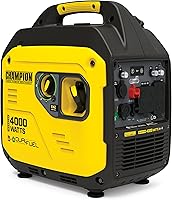
Buy the Champion if you want two fuel choices, more running watts or a TT-30R outlet. It fits RV users whose inlet matches, campers who value propane as an option and households planning to power several modest essentials within its capacity.
The Champion makes the most sense when its 3000-watt gasoline output or 2700-watt propane output covers your planned load. Its 51.8 lb weight also gives it an advantage if you often need to lift or move the generator.
Skip the Champion if you need more than its available running output, want an electric-start feature, or don't want to handle a second fuel type. A different generator may suit you better if your appliances call for more continuous power.
Also account for the cost and storage of a propane tank if that is your reason for choosing dual fuel. The generator's propane runtime assumes a 20 lb tank and a 25% load, so don't treat that figure as a promise for heavier use.
Who should buy the Generac GP3300i, and who should skip it?
Buy the Generac if 2500 running watts is enough and its outlet mix suits your setup. It fits gasoline-only users who want household outlets, two USB-A ports and an L5-30R twist-lock outlet.
The Generac may suit camping or backup plans built around a limited set of essentials. Its 59.5 lb weight and molded handle support one-person transport, though you should still plan the lift and route to the operating area.
Skip it if you need propane, more than 2500 running watts, or a direct TT-30R connection without an adapter. Its L5-30R twist-lock outlet is useful only when your cord or equipment has a compatible connection.
This model uses recoil start, not electric or remote start. If you need a different output range, compare options in our portable generator guide before deciding.
What setup and care steps help avoid common mistakes?
Plan your loads and connections before the first start. Write down the appliances you want to run, their running needs and any startup surges, then confirm that the total fits the generator.
Read the owner's manual before adding oil, connecting fuel or starting the engine. The Champion includes engine oil, an oil funnel and a propane hose; the Generac includes engine oil, an oil funnel and a tool kit.
Keep gasoline and propane away from heat and ignition sources, and use only the fuel connections specified for the generator. Don't switch fuels or connect a propane tank until you understand the manufacturer's procedure.
A common mistake is to plan around the generator's highest starting-watt figure as if it were continuous power. Another is to assume the Generac's L5-30R outlet plugs straight into a TT-30R RV inlet.
For routine care, follow the manual's schedule for oil checks, air filter care and storage. Let the unit cool before refueling, and store fuel only in approved containers in a suitable location.
What is the final decision in the Champion vs Generac generator comparison?
Choose the Champion for propane capability, higher running output and a matching TT-30R connection. Choose the Generac if 2500 running watts is enough and you want gasoline operation with USB-A ports and an L5-30R outlet.
If your RV inlet is TT-30R, the Champion has the simpler outlet match. The Generac can connect to that inlet with the required adapter, but include that accessory in your setup plan.
If neither output covers your essential loads with room for startup surges, step up to a larger generator instead of forcing either model into an undersized role. For the Champion's model-specific details, see our Champion 4000-Watt Dual Fuel review and best Champion inverter generators guide.
For the Generac's features and limits, read our Generac GP3300i review. The right Champion vs Generac generator is the one whose fuel, usable output and outlets match the equipment you actually plan to run.
Frequently asked questions
Is Champion or Generac better for a portable generator?
Champion fits buyers who want gasoline or propane and up to 3000 running watts on gasoline. Generac fits buyers who prefer a gasoline-only inverter with two USB-A ports and a 120V 30A twist-lock outlet.
Compare your planned loads, available fuel and connection needs before choosing.
Can the Champion 4000W Dual Fuel RV Inverter run on propane?
Yes. The Champion runs on gasoline or propane, with 3000 running watts on gasoline and 2700 on propane.
It runs for up to 10 hours on gasoline and up to 25 hours on a 20 lb propane tank, both at 25% load.
Can the Generac GP3300i run on propane?
No. The Generac GP3300i runs on gasoline only.
If you want propane as an option, the Champion offers it, though its running output is lower on propane than on gasoline.
Is the Generac GP3300i included in the April 2026 recall list?
The GP3300i is not in Generac's April 2026 recall list. Generac has recalled other GP models, so check your generator's model and serial number against current recall notices before use.
Can either generator connect to an RV?
The Champion has a 120V 25A TT-30R outlet. The Generac has a 120V 30A L5-30R twist-lock outlet, and connecting it to a standard RV TT-30R inlet requires an adapter that isn't included.
Confirm your RV inlet and follow the generator and RV manuals.