Inverter Generator vs Generator: What Is the Difference? (November 2026)
The main inverter generator vs generator difference is how each shapes power: an inverter cleans the current for sensitive electronics, while a regular generator sends raw AC straight to the outlet. Inverters also run quieter and sip less fuel at light loads, but they cost more per watt.
On this page (9 sections)
- Inverter generator vs generator: what actually differs?
- Power quality: why clean power decides most buyers
- Noise: the gap is real at light loads
- Fuel use: economy mode changes the math
- Outlets and connections: RV ready vs household only
- Portability and start: weight vs convenience
- Run time and engine size: what the numbers mean
- Who should buy which?
- Verdict: inverter generator vs generator difference in one line
The main inverter generator vs generator difference is how each shapes power: an inverter cleans the current for sensitive electronics, while a regular generator sends raw AC straight to the outlet. Inverters also run quieter and use less fuel at light loads, but you pay more per watt.
This inverter generator vs generator difference matters most when you plug in a laptop, a TV or a phone charger. For a circular saw or a space heater, the cleaner power of an inverter buys you less.
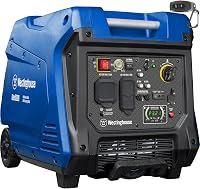
Here is how the two designs differ in practice, using two inverter models as the reference point: the Westinghouse iGen4500 and the WEN 56235i. A regular generator of the same wattage works the opposite way in each case.


Inverter generator vs generator: what actually differs?
An inverter generator cleans and regulates its output; a regular generator does not. That one change explains most of the other differences between them, from noise to fuel use to price.
A regular generator spins its alternator at a fixed engine speed. Whatever load you attach, the engine runs at the same pace and sends raw AC to the outlets.
Voltage and frequency can wander as the load changes.
An inverter generator takes that raw AC, converts it to DC and rebuilds a steady AC wave. The engine can slow down when the load is light.
The Westinghouse iGen4500 holds total harmonic distortion under 3%, and the WEN 56235i keeps it under 0.3% at no load and 1.2% at full load.
The table below puts the two designs side by side.
| Feature | Inverter generator | Regular generator |
|---|---|---|
| Power quality | Clean, regulated AC under 3% THD | Raw AC that can drift |
| Engine speed | Varies with the load | Fixed speed |
| Noise at light load | Quieter | Louder |
| Fuel use at light load | Lower | Steady |
| Weight | Lighter per watt in small sizes | Heavier open frame |
| Cost per watt | Higher | Lower |
| Best for | Electronics, camping, RVs | Tools, heaters, job sites |
The comparison is not about which one is better in every case. It is about which one matches what you plug in.
Power quality: why clean power decides most buyers
If your load includes electronics, the inverter's clean output is the deciding factor. Laptops, TVs, phones and modern appliances expect a steady frequency and voltage.
The Westinghouse iGen4500 states less than 3% total harmonic distortion. The WEN 56235i goes tighter, under 0.3% at no load and under 1.2% at full load.
Those figures describe how far the output wave departs from a pure sine wave, and lower is cleaner.
A regular generator's output can swing as loads switch on and off. Some electronics tolerate that; others shut down or misbehave.
If your plan is a TV, a laptop and a phone charger, the inverter's output is the safer match.
This is the same ground covered in our inverter vs non inverter generator breakdown. The short version: inverters are built for sensitive loads, and regular units are built for motor loads and tools.
Where clean power matters less
A circular saw, a space heater or a pump motor does not need a pure sine wave. These loads draw heavy current and tolerate rougher power.
A regular generator can handle them at a lower cost per watt.
If your list is all tools and heaters, put the money toward watts and outlets rather than power quality. The inverter's advantage shrinks to noise and fuel use.
Noise: the gap is real at light loads
Inverter generators run quieter because the engine slows when the load is light. That is the main reason campers and RV owners choose them.
The Westinghouse iGen4500 runs as low as 52 dBA. The WEN 56235i reaches 51 dBA at quarter load.
For scale, 51 dBA is close to the level of a normal conversation.
A regular generator holds its engine at one speed, so its noise stays steady and usually higher. You hear it as a constant drone rather than a sound that rises and falls with demand.
Quiet matters most in a campground or a driveway close to a neighbor's window. It matters less on a construction site where noise is expected anyway.
What the noise figure does not tell you
The dBA figure is measured at a set distance and load. Your distance from the unit and how much you draw change what you hear.
The enclosed design of an inverter also muffles sound in a way an open frame cannot.
Read the noise number as a comparison between models, not a guarantee of a quiet evening. The Westinghouse and WEN figures both land in the conversation-level range.
Fuel use: economy mode changes the math
At light loads, an inverter's variable engine speed burns less fuel. A regular generator burns fuel at a steady rate no matter what you plug in.
The Westinghouse iGen4500 runs up to 18 hours on a 3.4-gallon tank. That figure comes from economy mode, which lets the engine drop to a low speed when demand is low.
The WEN 56235i runs over 5.7 hours at half load on its one-gallon tank.
If you charge phones and run a few lights overnight, the inverter's low-load efficiency adds up. If you run a 15 amp heater for hours, the engine stays near full speed and the fuel advantage narrows.
Plan your refueling around your real load, not the best-case number. An 18-hour run time assumes economy mode and a light draw.
Running a big motor load will shorten it.
Outlets and connections: RV ready vs household only
The Westinghouse iGen4500 has an RV-ready 30 amp outlet; the WEN 56235i offers household and USB outlets. That difference decides which unit fits a travel trailer.
The Westinghouse panel includes a 5–20R 120V duplex household outlet, a TT-30R 30 amp RV outlet and two USB ports. That TT-30R is the outlet a travel trailer cord plugs into, so you do not need an adapter.
The WEN panel carries two three-prong 120V receptacles, one 12V DC receptacle and two 5V USB ports. It suits phones, tablets and small tools.
It does not have an RV outlet.
Both are parallel capable where the maker builds that in. The Westinghouse states parallel capability in its feature list.
The WEN has eco-mode for fuel economy.
Matching outlets to your loads
Count the plugs you need at once. A phone, a tablet and a small light fit the WEN's two household outlets and two USB ports.
An RV cord plus a household device needs the Westinghouse's separate outlets.
If your trailer has a 30 amp cord, the TT-30R saves you an adapter and a fussy connection. If you only camp with a tent and a cooler, the WEN's lighter panel is enough.
Portability and start: weight vs convenience
The WEN is far easier to carry; the Westinghouse is easier to start from a distance. Weight and start method pull in opposite directions here.
The WEN 56235i weighs 39 pounds. One person can lift it into a truck bed or carry it to a campsite without help.
It measures 17.3 x 11.5 x 17.5 inches.
The Westinghouse iGen4500 weighs 104.7 pounds. It rolls on a wheel and handle kit and has a telescoping handle.
It starts with a key fob remote, a push button or a recoil pull.
If you move the unit by hand often, 39 pounds is the number that matters. If it stays in one spot and you want to start it from inside the RV, the remote start is the feature you will notice.
Wheels vs a carry handle
The Westinghouse wheels and handle make a 104.7 pound unit moveable on flat ground. They do not help you lift it over a step or into a high truck bed.
The WEN's low weight means no wheels are needed. It is a lift-and-carry unit.
Plan your back and your helper accordingly.
Run time and engine size: what the numbers mean
The Westinghouse runs longer because its bigger engine and tank carry more fuel. The WEN runs less time per tank but is easier to refuel and store.
The Westinghouse engine displaces 224 cubic centimeters and carries 3.4 gallons. The WEN engine is 79 cubic centimeters with a one-gallon tank.
That size gap explains the run-time gap.
The WEN's fuel shutoff lets the carburetor run dry before the unit stops. That helps when you store it between trips.
The Westinghouse has an LED data center that shows fuel level, power output, remaining run time and voltage.
For a weekend camping trip, the WEN's small tank is easy to top up. For a multi-day outage, the Westinghouse's 18-hour run time means fewer trips to the gas can.
Who should buy which?
Buy the Westinghouse iGen4500 if you power an RV or home essentials; buy the WEN 56235i if you carry the unit yourself for small loads. The choice follows your loads and your back, not the label on the box.
Pick the Westinghouse iGen4500 for RVs and outages
The Westinghouse fits when you need to run a travel trailer's 30 amp cord or keep a fridge and a few lights going during an outage. Its clean power, long run time and remote start all point at that job.
If you already own a Champion or Generac inverter, a champion inverter generator comparison shows what changes. For the Westinghouse family as a whole, the westinghouse inverter generator roundup covers the other sizes.
Pick the WEN 56235i for light loads and carrying
The WEN fits when you charge phones and run a small tool or a fan, and you carry the unit to the spot. At 39 pounds it is the one you can lift alone.
A close rival in this class is the Generac GP3300i. Our generac gp3300i review shows how it compares on outlets and weight.
When a regular generator still wins
A regular generator wins when your load is all motors and heaters and you have space for an open frame. A pump, a circular saw or a space heater does not need clean power.
You get more watts per dollar.
It also wins when the unit stays in one place. The weight and noise penalty matters less on a job site than in a campground.
Verdict: inverter generator vs generator difference in one line
Pick an inverter when clean power, quiet running or carrying by hand matters; pick a regular generator when raw watts per dollar is the goal. The inverter generator vs generator difference comes down to your load list.
For most home and camping buyers in this comparison, the Westinghouse iGen4500 is the better overall pick. It scores 8.9 against 8.2 for the WEN because it covers more jobs: an RV outlet, remote start and 18 hours of run time.
The WEN wins on weight.
Start with what you will plug in. If the list includes electronics or a trailer cord, go inverter.
If it is all tools and the unit sits still, a regular generator gives you more watts for the money. For the full category picture, read the inverter vs non inverter generator guide next.
Our score weighs specs, features and buyer feedback against what you're shopping for.
Frequently asked questions
What is the difference between an inverter generator and a regular generator?
A regular generator sends raw AC power straight from the alternator to the outlet. An inverter generator converts that AC to DC, then back to clean AC at a steady frequency.
That extra step gives sensitive electronics stable power and lets the engine slow down when the load is light.
Are inverter generators quieter than regular generators?
Yes, usually. The Westinghouse iGen4500 runs as low as 52 dBA and the WEN 56235i reaches 51 dBA at quarter load.
A regular open-frame generator of similar wattage typically runs louder because its engine stays at a fixed speed.
Enclosure design and load size also affect the final noise level.
Can a regular generator run a laptop or TV safely?
It can, but the power quality is less certain. A regular generator's output can drift in frequency and voltage, and some electronics react badly to that.
An inverter generator holds total harmonic distortion under 3%, which electronics makers treat as safe for computers, TVs and phones.
Is an inverter generator worth the extra cost?
It is worth it if you power electronics, camp near other people or want to carry the unit by hand. A regular generator makes more sense when you only run power tools, heaters or other motor loads and you have room for a heavier open-frame unit.
Do inverter generators use less fuel?
At light loads, yes. An inverter's engine speed follows the load, so it burns less fuel when you draw only a little power.
The Westinghouse iGen4500 runs up to 18 hours on a 3.4-gallon tank.
A regular generator runs at a fixed engine speed and burns fuel at a steady rate whatever you plug in.