Inverter Generator vs Normal Generator: Which to Buy? (November 2026)
Buy an inverter generator for electronics, campsites and RV outlets; buy a normal generator for big motor loads and whole-home backup. In this inverter generator vs normal generator comparison, clean power and quiet running decide it for most small and RV buyers.
On this page (8 sections)
- Inverter vs normal generator: what actually differs?
- Which type gives cleaner power for electronics?
- How loud is each type in real use?
- Which type handles a big motor load?
- Which type costs less to run and carry?
- Which type fits an RV or campsite?
- Who should buy which?
- Verdict: which generator should you buy?
Buy an inverter generator for electronics, campsites and RV outlets; buy a normal generator for big motor loads and whole-home backup. In this inverter generator vs normal generator comparison, clean power and quiet running decide it for most small and RV buyers.
The short answer: an inverter wins for anything with a circuit board in it. A normal generator wins when you need to start a big well pump or feed a transfer switch.
The four generators below cover both sides of that line. Each one gets a clear job, so you can match the choice to your own load.
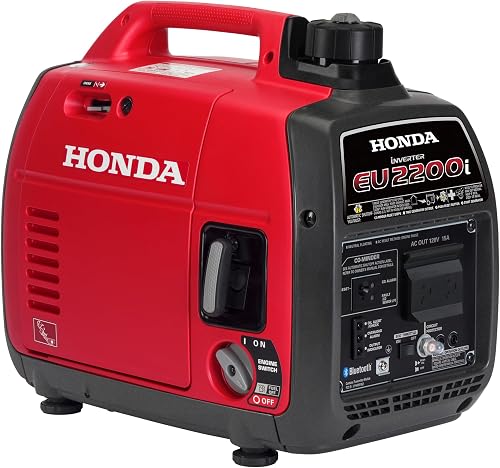 Best for RV and campsite power
Honda EU2200i 2200 Watt Inverter Generator
 Best for whole-home backup
Westinghouse 14500 Peak Watt Tri-Fuel Home Backup
Inverter vs normal generator: what actually differs?
The difference is how each one makes its AC power. A normal generator spins its engine at a fixed speed and sends the raw output straight to the outlets.
An inverter generator converts the output to DC, then rebuilds a clean sine wave at whatever engine speed the load needs.
That single design choice explains almost every practical gap. Normal units run at one speed, so the engine is loud and thirsty even when you draw a little power.
Inverters throttle down when the load drops, so a 2200 watt unit sipping a phone charger gets quieter and uses less fuel.
The rebuilt wave is the second payoff. Inverters quote total harmonic distortion, or THD, and the lower the number, the closer the output is to the pure sine wave your electronics expect.
The Westinghouse Tri-Fuel stays under 5%, and the iGen4500 stays under 3%.
A normal generator's raw output is fine for motors and resistive loads like heaters. Sensitive gear such as a laptop, a TV or a camper's control board wants the cleaner wave.
Our inverter vs non inverter generator guide goes deeper into the electronics if you want the full explanation.
Which type gives cleaner power for electronics?
The inverter gives cleaner power, and that matters more as your gear gets smarter. The Honda EU2200i uses advanced inverter technology rated for computers.
The Westinghouse Tri-Fuel holds under 5% THD.
The WEN holds under 1.2% THD at full load.
A normal generator's output rises and falls with engine speed. Lights can flicker and a laptop charger may run warmer than it should.
Many devices tolerate it, but "tolerate" isn't the same as "suited to."
THD is the number to compare. Under 5% is generally safe for phones, TVs and laptops.
If your load is a space heater, a circular saw or a sump pump, the cleaner wave buys you little.
Where the numbers land on these four units
The Tri-Fuel is the normal generator of the group, and it still publishes a THD figure: under 5%, which Westinghouse describes as clean enough for phones, computers and TVs. It also uses copper windings, which help the unit run cooler and last longer.
That makes it a normal generator that narrows the usual power-quality gap rather than ignoring it.
The iGen4500 goes further at under 3% THD. The WEN goes furthest on paper at under 0.3% at no load and under 1.2% at full load.
The Honda leans on its inverter design and computer rating rather than a headline THD number. For a camper charging a laptop and running a trailer's control board, all three inverters clear the bar.
How loud is each type in real use?
The inverter is far quieter, often by a conversation's worth. The Honda EU2200i runs at 48 to 57 dB(A), which Honda compares to less noise than a normal conversation.
The WEN runs at 51 dB at quarter load.
The iGen4500 drops as low as 52 dBA. A normal generator runs at a fixed high rpm, so its noise stays up even when you draw almost nothing.
Campsite rules often set a noise limit. A 48 to 57 dB inverter can sit inside many of those limits; an open-frame unit at full song usually can't.
The Westinghouse Tri-Fuel is an open-frame design at 230 lb, and its noise reflects that. Quiet also means you can talk, sleep or work near the unit.
If you'll run the generator on a patio or beside an RV, noise decides as much as watts.
Quiet at part load versus quiet at full tilt
The inverter noise figures are usually quoted at a light load, and that's fair because that's how campers run them. The WEN's 51 dB figure is at quarter load.
The Honda's 48 to 57 dB(A) range spans light use up to heavier draw, so the top of that band is what you hear when the load climbs.
An open-frame unit doesn't have that part-load advantage. The Tri-Fuel runs its 550cc engine at a fixed speed for as long as it's on, so the noise floor is set by the engine, not your load.
If you'll run the unit near people, the inverter's ability to hush down when nothing is drawing power is the feature you'll notice most.
Which type handles a big motor load?
The normal generator wins on raw wattage and surge, and that's where the Westinghouse Tri-Fuel earns its place. It delivers 11,500 running watts and 14,500 peak watts on gasoline.
The iGen4500 delivers 3900 running and 5000 peak.
The Honda delivers 2200 watts. The WEN delivers 1900 running and 2350 surge.
Motors draw a starting surge well above their running watts. A well pump, a large RV air conditioner or an electric furnace can demand several times its rated draw for a second or two.
The Tri-Fuel's 14,500 peak covers those starts with room left for the rest of the house. The inverters cover smaller motor loads.
The Honda's 2200 watts suits a fridge, a microwave or a small AC unit. The iGen4500's 5000 peak handles a travel trailer's air conditioner when it isn't sharing the circuit with much else.
How the outlets carry the load to your panel or trailer
The Tri-Fuel is built for a panel connection. It has a 14-50R 50A outlet and an L14-30R 30A outlet, and Westinghouse lists them for an interlock kit, a manual transfer switch or the WATS200 automatic transfer switch sold separately.
A single cord hookup can feed the air conditioner, fridge, sump pump and lights together.
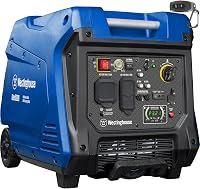
The inverters are built around cords you plug in one at a time. The iGen4500's TT-30R 30A outlet takes a travel trailer's shore cord directly, plus two 20A household outlets and two USB ports.
The Honda and the WEN feed a few devices through ordinary household receptacles. That outlet layout tells you the intended job.
A 50A outlet and transfer switch readiness mean whole-home backup. A TT-30R means trailer power.
Which type costs less to run and carry?
Inverters cost more to buy per watt, but they sip fuel and lift easily. The Honda weighs just over 47 lb and runs 3.2 to 8.1 hours on a 0.95 gal tank.
The WEN weighs 39 lb and runs about 5.7 hours at half load on one gallon.
The iGen4500 weighs 104.7 lb and runs up to 18 hours on 3.4 gal in economy mode. The Tri-Fuel weighs 230 lb and runs up to 19 hours at 25% load on 9.5 gal.
The weight gap is the one you feel every trip. A 39 to 47 lb inverter fits in a truck bed or a camper bay without a ramp.
The Tri-Fuel needs its never-flat wheels, a handle and a lift bracket, plus a second person for stairs. Fuel is the other cost.
An inverter throttles down at part load, so light use burns less. A normal generator at a fixed rpm burns fuel at the same rate whether you're running a lamp or the whole house.
What the fuel choice adds to the running cost picture
The Tri-Fuel's fuel flexibility changes the math in an outage. It runs on gasoline, propane or natural gas, so you can draw on a home's natural gas line or a propane tank when gasoline is hard to get.
The inverters run on gasoline only. The Honda's 0.95 gallon tank is small, but its 3.2 to 8.1 hour range means the low end is heavy load and the high end is light.
The WEN's fuel shutoff lets you run the carburetor dry before storage. The iGen4500's 3.4 gallon tank stretches the longest among the inverters.
Which type fits an RV or campsite?
The inverter fits RV and campsite life, and the iGen4500 is the one to beat for travel trailers. It has an RV-ready TT-30R 30 amp outlet, two 20A household outlets and two USB ports.
At under 3% THD it's safe for the trailer's control board and TV.
The Honda's 2200 watts and 48 to 57 dB(A) suit a smaller camper, and its CO-MINDER shuts the unit down when carbon monoxide rises near the home or camper.
A normal generator can charge an RV battery through its outlets, but the fixed speed and raw wave make it a poor fit for a campsite. Many campgrounds set noise limits an open-frame unit won't meet.
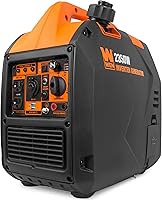
The WEN is the budget entry for tent camping and small loads. Its 39 lb body and 51 dB output make it easy to carry and easy to live beside.
Features that matter at a campsite
The Honda's My Generator app is the standout for campers. Through Bluetooth you get remote start and stop, monitoring and service reminders, so you can switch the unit on from inside the rig.
The CO-MINDER adds a safety layer for anyone running a generator near a camper. The iGen4500's remote key fob start and its rotating LED data center do the same job in plainer form.
The WEN skips remote start and keeps its panel simple. For a tent camper who walks over to pull the cord, that's a fine trade for the low weight.
The Honda's 3-year residential warranty also outlasts the WEN's two years, which matters for a unit that lives in a camper bay.
Who should buy which?
Buy an inverter for electronics, camping and RV outlets; buy a normal generator for whole-home backup and heavy motor starts. Most small and RV buyers should start with an inverter and size up only when a load proves too big.
The Honda EU2200i suits the camper who wants quiet, clean power in a 47 lb package. The iGen4500 suits a travel trailer with an air conditioner and a 30A shore cord.
The WEN suits a first-time buyer on a budget who needs clean power for small gear. The Westinghouse Tri-Fuel suits the household that wants a transfer switch, a 50A outlet and tri-fuel flexibility for a long outage.
If you own a Champion or Generac inverter already, our roundups of best Champion inverter generators and best Westinghouse inverter generators help you compare within the brand. For a closer look at a mid-size option, our Generac GP3300i review covers what that model does well.
The details that tip a close call
Weight decides between the Honda and the WEN. The WEN's 39 lb beats the Honda's just over 47 lb, but the Honda adds Bluetooth control, the CO-MINDER and a 3-year warranty.
If it lives beside a camper and you want remote start and carbon monoxide protection, the Honda's extras are worth the pounds.
Wattage decides between the Honda and the iGen4500. A trailer's air conditioner and a 30A shore cord push you to the 3900 running watts and TT-30R outlet of the iGen4500.
Fuel flexibility decides between the iGen4500 and the Tri-Fuel. If your plan includes a home panel and a multi-day outage, propane and natural gas options outweigh the inverter's quieter running.
Verdict: which generator should you buy?
The Honda EU2200i is the best pick for most small and RV buyers, and the Westinghouse Tri-Fuel is the best normal generator for home backup. That's the inverter generator vs normal generator decision in one line: clean, quiet and light for campers, raw wattage and fuel flexibility for houses.
Go with the Honda when you need 2200 watts of clean, quiet power you can carry. Move to the iGen4500 when a trailer's air conditioner and a 30A outlet set the requirement.
Choose the WEN when budget and weight matter more than running watts. Pick the Westinghouse Tri-Fuel when a transfer switch, a 50A outlet and tri-fuel operation define the job.
If your load includes both a house panel and a campsite, buy for the bigger job first.
Frequently asked questions
Is an inverter generator better than a normal generator?
An inverter generator is better for electronics, campsites and RVs because it produces clean power and runs quietly. A normal generator is better for large motor loads and whole-home backup, where raw wattage and a 50A outlet matter more than noise or THD.
What is the difference between an inverter generator and a normal generator?
A normal generator spins its engine at a fixed speed and sends the raw AC straight out. An inverter generator converts the output to DC and rebuilds a clean sine wave at the speed the load needs, which cuts noise and fuel use.
Can I run a refrigerator on an inverter generator?
Yes. The Honda EU2200i's 2200 watts cover a fridge plus a few small loads, and its clean output suits the compressor.
Check the fridge's starting surge and add up anything else running at the same time.
Why does total harmonic distortion matter?
THD measures how far the output wave strays from a pure sine wave. Under 5% is generally safe for laptops, TVs and phones; the Westinghouse Tri-Fuel rates under 5% and the iGen4500 rates under 3%.
Do inverter generators cost more than normal generators?
Yes, inverter models usually cost more per watt because of the electronics and quieter enclosure. The trade is cleaner power, lower noise and better fuel economy at part load, which matters most for campers and RV owners.
Can I parallel two inverter generators?
Some inverter models are built for it. The Westinghouse iGen4500 is parallel capable, so a second matching unit adds capacity for a bigger RV air conditioner or more appliances.