Inverter Generator vs Petrol Generator: Which to Buy? (November 2026)
Choose an inverter generator for electronics, campsites and RV hookups; choose a conventional petrol generator for heavy tools and big backup loads. The inverter generator vs petrol generator choice comes down to what you plug in and how close people will be to the noise.
On this page (9 sections)
- Inverter generator vs petrol generator: what actually differs?
- Which type gives cleaner power for electronics?
- Which one is quieter at a campsite?
- Which type is lighter to carry?
- Which uses less fuel per watt?
- How much power do you really need?
- Which type costs less to buy?
- Who should buy which?
- Verdict: which type should you buy?
Choose an inverter generator for electronics, campsites and RV hookups; choose a conventional petrol generator for heavy tools and big backup loads. The inverter generator vs petrol generator decision comes down to what you plug in and how close people will be to the noise.
An inverter generator cleans and stabilizes its output before it reaches your devices. A petrol generator sends raw AC straight from the alternator.
That one difference shapes noise, fuel use, weight and price.
This comparison uses four models across both types. It focuses on the practical differences you'll notice in camp, at the trailhead or during an outage.
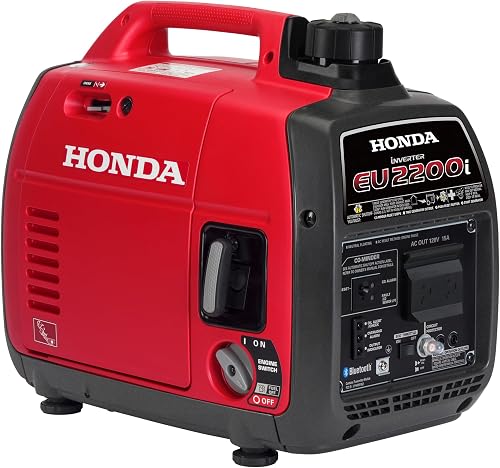 Best for quiet campsite power
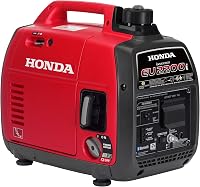
Honda EU2200i 2200 Watt Inverter Generator

Inverter generator vs petrol generator: what actually differs?
An inverter generator produces clean, steady power; a petrol generator produces raw AC that rises and falls with the load. The inverter adds electronics that convert engine output to DC and back to a stable AC sine wave.
That conversion is why an inverter runs laptops, phones and modern TVs without worry. The Honda EU2200i uses inverter technology to supply power it describes as reliable enough for computers.
A conventional generator like the Westinghouse WGen9500DF sends power straight from the alternator. Voltage and frequency track engine speed, so a changing load moves them.
A fridge cycling on and off, or a space heater kicking in, is enough to shift the output a little.
The electronics also let the inverter's engine speed float. A conventional unit has to hold a fixed speed to keep its 60 hertz frequency steady.
That fixed speed is the root of both its extra noise and its steady fuel draw, whatever you have plugged in.
Here is how the four models line up on the specs that matter most.
| Product | Best for | Output | Noise | Weight | Our score |
|---|---|---|---|---|---|
| Honda EU2200i 2200 Watt Inverter Generator | quiet campsite power | 2200 watts | 48 to 57 dB(A) | 51 lb | 9.4 |
| Westinghouse 12500W Dual Fuel Home Backup | whole-home backup | 12500 peak / 9500 running W | 9.0 | ||
| Westinghouse iGen4500 5000W Inverter | RV and tailgate use | 5000 peak / 3900 running W | As low as 52 dBA | 104.7 lb | 8.9 |
| WEN Super Quiet 2350W Inverter | budget first-time buyers | 2350 surge / 1900 rated W | 51 dB at quarter load | 39 lb | 8.2 |
Which type gives cleaner power for electronics?
An inverter generator wins for electronics. The Westinghouse iGen5000 keeps total harmonic distortion under 3% at rated load, and the WEN 56235i goes under 1.2% at full load.
That clean sine wave is what protects circuit boards.
Conventional generators don't publish that kind of figure, because the waveform isn't reshaped. Spikes and frequency swings can stress chargers, routers and TV power supplies.
A laptop power brick has some tolerance, but a router or a smart TV mainboard has less.
The Honda goes further for safety. Its CO-MINDER monitors carbon monoxide and shuts the unit down before levels near a camper or home become dangerous.
That matters when a generator runs near a tent or RV.
If your load is a phone, a laptop, a CPAP machine or a modern refrigerator control board, the inverter's clean output is the deciding feature. A petrol generator can run these through a surge protector, but it's a workaround rather than a design goal.
The WEN's under-1.2% figure at full load is the strongest clean-power spec in this group for a light-duty unit.
Which one is quieter at a campsite?
The inverter generator is the quieter type, and the gap is large. The Honda EU2200i runs at 48 to 57 dB(A), which is less noise than a normal conversation.
The WEN sits at 51 dB at quarter load.
The Westinghouse iGen5000 runs as low as 52 dBA thanks to its economy mode. That mode lets engine speed follow the load instead of holding high revs all the time.
A conventional open-frame generator like the WGen9500DF has no such enclosure or economy throttle. Its engine runs at a set speed to hold frequency, and the open frame lets the sound out.
The 457cc engine is also much larger than the inverter engines here.
Many campgrounds set quiet hours and some have decibel limits. A 48 to 57 dB(A) inverter fits those rules far more easily than an open-frame unit.
If you'll sleep near the generator, this is the spec to check first.
What the noise numbers really mean
The 48 to 57 dB(A) Honda figure is a range, not a single number. It widens as the load grows, so the loud end shows up when you're running a microwave or an air conditioner.
The WEN's 51 dB figure is measured at quarter load, so it's a light-load number. The iGen5000's 52 dBA is also a best case in economy mode.
Treat each figure as what you'll hear when the unit is coasting, and expect more when it's working hard.
An open-frame petrol generator has no quiet end at all. It runs near its loudest the whole time, which is why the gap feels bigger at a campsite than the decibel labels suggest.
Which type is lighter to carry?
Inverter generators are built lighter, so they're the easier type to lift into a truck bed or trailer. The WEN 56235i weighs 39 lb.
The Honda EU2200i weighs 51 lb.
The Westinghouse iGen5000 is the heavyweight of the inverter group at 104.7 lb. It has wheels and a telescoping handle, so it rolls rather than lifts.
The WEN's compact 17.3 by 11.5 by 17.5 inch body is the easiest to store in a trunk or a closet.
The WGen9500DF open-frame unit needs its never-flat wheels, handle and lift bracket to move. At 27.2 by 26.1 by 26.5 inches it takes real floor or truck-bed space.
It's a stay-put machine, not something you carry to a picnic table.
Weight decides how often you'll actually use a generator. A 39 lb unit goes in the trunk alone; a 100 lb unit needs a ramp or a second person.
If you move it every weekend, the lighter inverter is the practical buy. The Honda's 21 by 12.24 by 19.72 inch footprint keeps it manageable for one person to lift into a van.
Which uses less fuel per watt?
The inverter generator usually stretches a gallon further, because it can idle down when the load is small. The WEN runs over 5.7 hours at half load on a one-gallon tank.
The Honda runs 3.2 to 8.1 hours on 0.95 gallons depending on load.
The Westinghouse iGen5000 runs up to 18 hours on 3.4 gallons. Its economy mode is what makes that possible: the engine slows when demand drops.
That is roughly 5.3 hours per gallon at best, against the WEN's 5.7 hours per gallon at half load on a smaller tank.
The WGen9500DF runs up to 12 hours on 6.6 gallons, but it's producing far more watts at a steady engine speed. Its fuel use per watt is competitive for its size, yet it can't throttle down for a phone charger.
The Honda's Eco Throttle System is the same idea as the Westinghouse economy mode, aimed at the light-load camper.
For light, intermittent loads like a campsite or a tailgate, the inverter's variable speed saves fuel and noise together. For a constant heavy load during an outage, the gap narrows.
Our inverter vs non inverter generator guide digs into the electrical side if you want more detail.
How much power do you really need?
Size the generator to your largest starting load, not to the number of outlets. A fridge compressor or an RV air conditioner can draw two to three times its running watts for a few seconds.
The Honda's 2200 watts covers small AC units, microwaves, fridges and hair dryers as typical loads. That suits a tent, a small trailer or a tailgate.
The WEN's 2350 surge and 1900 rated watts fit phones, tablets, laptops and a small fan or light. It's a light-duty unit, not an RV air conditioner starter.
Its two 120V 14A household receptacles, one 12V 8.3A DC receptacle and two 5V USB ports set its ceiling.
The Westinghouse iGen5000 offers 5000 peak and 3900 running watts with a 30A RV outlet. That's the inverter pick for a travel trailer with an air conditioner or a larger tailgate setup.
Its two 20A household outlets and two USB ports round out the panel.
The WGen9500DF's 12,500 peak and 9500 running watts on gas, or 11,200 and 8500 on propane, target whole-home backup. It's transfer switch ready with a 50A outlet for major appliances.
The 30A L14-30R and two GFCI 20A household outlets cover smaller loads.
Start with a watt budget. Add running watts for everything on at once, then add the surge of the biggest motor.
That number points to the type and size faster than any label. A 1900-watt inverter and a 9500-watt open frame are not competing for the same job.
Which type costs less to buy?
A petrol generator gives you more watts per dollar; an inverter generator costs more for the same output. The inverter's electronics and quieter enclosure are the reason.
That premium buys clean power, lower noise and better fuel efficiency at light loads. For a camper or a tailgater, those three things are the whole point.
For a homeowner who needs maximum backup watts and runs the unit away from the house, the conventional unit's lower cost per watt is the stronger argument. You spend less and get more capacity.
Don't compare headline watts alone. Compare the watts you'll actually use, then weigh the price gap against noise and power quality.
A cheaper petrol unit that's too loud to run at camp isn't a saving.
Why inverters cost more to build
The inverter board itself is the first extra part. It has to convert the engine's output to DC and reshape it into a clean sine wave, which means real electronics rather than a bare alternator.
The quieter enclosure is the second. The Honda and WEN units wrap the engine to hold noise down, and that housing adds material and design work.
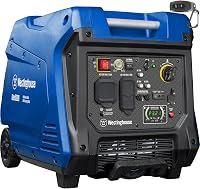
The Westinghouse iGen5000 pairs its quiet build with a rotating LED data center that shows fuel level, power output and remaining run time.
None of that adds watts. It adds quality of power and quality of life.
That's why an inverter and a petrol generator of the same wattage don't land in the same place on the shelf.
Who should buy which?
Buy an inverter generator if you camp, tailgate or power electronics; buy a petrol generator if you back up a house or run heavy tools. The type should match your main use, not your occasional one.
Buy an inverter generator if...
You sleep near the unit, plug in sensitive gear or move it often. The Honda EU2200i is the top pick here, with its 48 to 57 dB(A) output, CO-MINDER shutdown and 51 lb body.
Its 2200 watts handle a small AC, a fridge or a microwave. It also pairs with Honda's My Generator app for remote operation and monitoring over Bluetooth, plus a 3-year residential warranty.
The Westinghouse iGen5000 is the step up for travel trailers. Its 30A RV outlet and under-3% THD make it a clean match for a camper's electronics and air conditioner.
Remote start from the key fob saves you a walk in the rain.
The WEN 56235i is the budget entry. At 39 lb and 51 dB at quarter load, it's easy to carry and quiet enough for a campsite with light loads.
Its 1900 rated watts keep it to phones, laptops and small appliances. The fuel shutoff also helps the carburetor last, which matters for a unit that sits between trips.
If you want more inverter options at each size, our roundups of the best Champion inverter generator models and the best Westinghouse inverter generator picks cover the range.
Buy a petrol generator if...
You need maximum watts for a house, a jobsite or heavy power tools. The Westinghouse WGen9500DF's 12,500 peak watts and 50A outlet are built for transfer-switch backup, and it runs on propane when gas is short.
The VFT display shows voltage output, frequency and lifetime hours so you can track maintenance.
Accept the trade-offs: open-frame noise, more weight and less clean power for delicate electronics. Run it away from windows and doors, and never in a garage or tent.
The automatic low oil shutdown protects the engine when it runs long hours during an outage.
A petrol generator also suits a buyer who wants the lowest cost per watt and will use it for a circular saw or a welder rather than a laptop. Match the outlet type to the tool.
The 14-50R 50A outlet is what makes whole-home hookups practical.
If you're shopping in the small camping class specifically, our Generac GP3300i review covers a 3300-watt inverter aimed at trailers and tailgates.
Verdict: which type should you buy?
For most readers shopping this comparison, the inverter generator is the better buy. It gives clean power for phones, laptops and TVs, runs quietly enough for a campsite and sips fuel at light loads.
The Honda EU2200i is our overall pick, scoring 9.4 for its 48 to 57 dB(A) output, CO-MINDER shutdown and 2200 watts.
Its app control and 3-year residential warranty tip it further for a camper.
The inverter generator vs petrol generator call flips when raw watts matter more than quiet. If you're backing up a whole house or running heavy tools, the Westinghouse WGen9500DF's 12,500 peak watts and dual-fuel engine are the right tool.
Pick the inverter for camp and electronics; pick the petrol unit for the house and the jobsite.
Frequently asked questions
Is an inverter generator better than a petrol generator?
It depends on the load. An inverter generator delivers clean, stable power for electronics and runs quieter, which suits camping and RV use.
A conventional petrol generator is usually cheaper per watt and better for heavy tools or whole-home backup, but it is louder and its power is less clean.
What is the difference between an inverter generator and a petrol generator?
An inverter generator converts engine power to DC, then back to clean AC at a steady frequency. A conventional petrol generator sends raw AC straight from the alternator, so voltage and frequency can swing with the load.
Can I run a fridge on an inverter generator?
Yes, if the generator's running watts cover the fridge and its surge watts cover the compressor start. The Honda EU2200i, for example, lists refrigerators among its typical loads at 2200 watts.
Why are inverter generators more expensive?
The inverter electronics and quieter enclosure add cost. You pay for clean power, lower noise and fuel efficiency rather than raw wattage, so a petrol generator of the same wattage usually costs less.
Can I plug a laptop into a petrol generator?
It is risky without a clean power source. Conventional generators can produce voltage spikes and frequency swings that sensitive electronics do not like.
An inverter generator with low total harmonic distortion is the safer match for laptops and phones.