Westinghouse iGen4500 Inverter Generator Review: Worth It? (October 2026)
The Westinghouse iGen4500 is a gasoline inverter generator with 3,900 rated watts, remote start and an RV-ready 30 amp outlet. It suits RV owners and households that need portable backup power and can manage a 104.7 lb machine.
On this page (11 sections)
- Is the Westinghouse iGen4500 a good fit?
- What can 3,900 rated watts run?
- Is the Westinghouse iGen4500 suitable for a 30 amp RV?
- What starting and display features does it have?
- How does it compare with the Champion alternatives?
- How should you choose a generator for your needs?
- What should you check before buying the Westinghouse iGen4500?
- How should you set up and care for it?
- How can you use a portable generator safely?
- What common buying and operating mistakes should you avoid?
- Which generator should you choose?
The Westinghouse iGen4500 is a gasoline inverter generator with 3,900 rated watts, remote start and an RV-ready 30 amp outlet. It suits RV owners or households that need portable backup power and can manage a 104.7 lb machine.
Its 5,000 peak watts support starting loads, but the rated output is the figure to use when planning steady power. The name can be confusing: the product here is identified as iGen5000, with a model number of iGen5000.
Is the Westinghouse iGen4500 a good fit?
The Westinghouse iGen4500 is a strong match if remote starting, a 30 amp RV connection and gasoline operation suit your plans. Its output can cover a group of essential loads, but it does not make a household whole-home ready by itself.
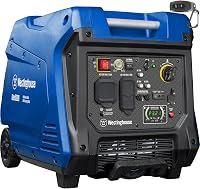
Westinghouse iGen4500 5000W Inverter: Best for remote start

- 5000 peak watts
- 3900 rated watts
- Remote, electric and recoil start
- 30 amp RV outlet
A gas inverter with remote, electric and recoil start, a TT-30R RV outlet and a rotating display for fuel level and remaining run time.
Pros
- Remote start key fob included
- 30 amp TT-30R RV outlet
- Up to 18 hours of run time claimed on a 3.4 gallon tank
- Rotating display shows fuel and output information
Cons
- Weighs 104.7 lb
- Gasoline only
- Runtime varies with load
The telescoping handle and wheel kit help with moving it, yet the 104.7 lb weight still calls for a sound plan for loading and storage. Choose another model if you need a generator that one person can lift more easily, or if propane is a requirement.
What does the Westinghouse iGen4500 name refer to?
This review covers the gasoline Westinghouse iGen4500 5000W Inverter, identified by model number iGen5000. Its rated output is 3,900 watts, with 5,000 peak watts for brief starting demand.
What can 3,900 rated watts run?
The iGen4500 can supply up to 3,900 rated watts, subject to the combined running and starting demands of connected equipment. Make a list of the appliances you want to power together, add their running watts, then check whether the largest motor can start while the other loads are operating.
A refrigerator, lights, modem and small devices may fit, depending on their actual power needs. A well pump, sump pump, furnace blower or window air conditioner can raise the starting demand, so check each appliance label or manual before making a plan.
Our guide to starting watts versus running watts explains the difference between steady use and motor startup. The examples in what a 5000 watt generator can run can also help you think through a load list.
Avoid treating 5,000 peak watts as continuous capacity. The 3,900 rated watts figure is the limit to use when deciding which loads can stay on together.
Is the Westinghouse iGen4500 suitable for a 30 amp RV?
The TT-30R 30 amp outlet makes this a potential match for an RV with a compatible 30 amp connection. Check the RV's total demand and its manual before connecting, especially if you plan to run air conditioning alongside other large appliances.
The generator also has a 5–20R household duplex outlet and two USB outlets. These support common household devices, but every connected load draws from the same available generator output.
Use our 30 amp RV generator size guide to plan the loads and connection. If you are choosing a generator mainly for home backup, the portable generators for home use buyer's guide covers the broader tradeoffs.
What starting and display features does it have?
The Westinghouse offers remote, electric and recoil starting, giving you three ways to start it. Its included key fob handles remote start, and the rotating display shows fuel level, power output, remaining runtime, voltage and lifetime hours.
Westinghouse says noise output can be as low as 52 dBA, and runtime can reach 18 hours on a 3.4 gallon gasoline tank with Economy Mode. Those figures depend on operating conditions and load, so plan around your expected power use rather than assuming the maximum runtime.
Westinghouse describes the unit as producing less than 3% total harmonic distortion. Follow the generator and device manuals when connecting sensitive electronics.
This model runs on gasoline only. Skip it if you want to switch between gasoline and propane, or if you need to keep propane on hand as a backup fuel.
How does it compare with the Champion alternatives?
The Westinghouse offers the highest rated gasoline output here, while both Champion models accept gasoline or propane. The smaller Champion is much lighter, and the larger one offers electric start along with higher output than the smaller Champion.
| Generator | Running output | Fuel | Start and RV connection |
|---|---|---|---|
| Westinghouse iGen4500 | 3,900 watts | Gasoline | Remote, electric and recoil; TT-30R |
| Champion 4000W Dual Fuel RV Inverter | 3,000 watts gasoline; 2,700 propane | Gasoline or propane | Recoil; TT-30R |
| Champion 4500W Dual Fuel Inverter | 3,500 watts gasoline; 3,150 propane | Gasoline or propane | Electric; TT-30R |
The Champion 4000W Dual Fuel RV Inverter weighs 51.8 lb, making it the easiest of these three to move. It has less running output and recoil start, but its gasoline and propane options and CO Shield carbon monoxide auto shutoff system suit lighter RV loads and buyers who value portability.
Champion 4000W Dual Fuel RV Inverter: Best for lighter RV trips

- 3000 running watts on gasoline
- 2700 running watts on propane
- Gasoline and propane
- 51.8 lb
A lighter dual fuel option for RV needs that fit within its lower running output. It has recoil start and a TT-30R outlet.
Pros
- Runs on gasoline or propane
- Weighs 51.8 lb
- TT-30R RV outlet
- CO Shield carbon monoxide auto shutoff system
Cons
- Lower running output than the Westinghouse
- Recoil start
- Parallel kit sold separately
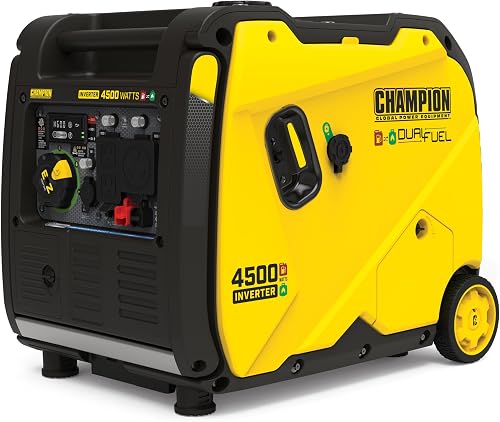
The Champion 4500W Dual Fuel Inverter has electric start and supplies 3,500 running watts on gasoline or 3,150 on propane. It weighs 99.2 lb, so it remains a substantial load to move, but it fits buyers who want dual fuel without dropping to the smaller Champion's output.
Champion 4500W Dual Fuel Inverter: Best for propane flexibility
- 3500 running watts on gasoline
- 3150 running watts on propane
- Gasoline and propane
- Electric start
A dual fuel alternative with electric start and more running output than the smaller Champion option. It weighs 99.2 lb.
Pros
- Runs on gasoline or propane
- Electric start
- TT-30R RV outlet
- CO Shield carbon monoxide auto shutoff system
Cons
- Heavier than the smaller Champion
- Lower gasoline running output than the Westinghouse
- Parallel kit sold separately
The 4000W Champion makes sense when lifting and fuel choice matter more than maximum output. Choose the 4500W Champion when you want electric start and propane flexibility, and the Westinghouse when remote start and its higher gasoline output are priorities.
How should you choose a generator for your needs?
Choose by the appliances you need to run, the fuel you can store and the weight you can handle. Start with the load list, then compare outlet type and starting method instead of choosing by peak watts alone.
For home backup, identify the essentials you need at the same time, such as a refrigerator, lights, communications equipment or a pump. Add their running watt requirements, then check each motor's starting demand; if the combined figures do not fit, decide which items can take turns or consider a larger generator.
For RV use, confirm the outlet and your expected combination of loads. A TT-30R connection is useful only when it matches the RV, and the generator still has a finite wattage limit shared by all connected appliances.
For trips with frequent loading, weight may matter as much as output. The Westinghouse's wheel kit and telescoping handle help with transport, but its weight can make ramps, lifting and storage a two-person job.
If you want propane availability or lower carry weight, compare the Champion options before deciding.
What should you check before buying the Westinghouse iGen4500?
Confirm your load, outlet needs and storage plan before choosing the iGen4500. Its features are useful when they match the equipment you will connect and the place where it will operate.
Measure the storage space and the route from storage to the operating spot. At 24.5 x 17.5 x 20 in and 104.7 lb, the Westinghouse needs room for its footprint and a practical way to roll or lift it.
Think through the starting routine, too. Remote start is convenient when the generator is positioned within the key fob's usable range, while electric and recoil starts provide alternatives at the unit.
Keep the key fob and manual where they will be available when you need them.
Westinghouse includes a 3-year limited service, labor and parts coverage and a nationwide customer service network. Read the warranty terms to understand coverage and service steps for your location.
How should you set up and care for it?
Set up the generator outdoors on a stable, level surface with clear airflow, then follow the manual for assembly, oil, fuel and startup. The supplied components include engine oil and a funnel, but the manual should guide the exact preparation and maintenance schedule.
Before the first use, check the included quick-start guide and owner’s manual. Confirm that the required oil and fuel are in place, learn how to use the display and starting controls, and practice the start and stop sequence before an outage or trip.
During operation, use Economy Mode when it suits the load, and read the display for fuel level and remaining runtime. Avoid overloading the generator by adding appliances without checking their combined running and startup needs.
After use, let the unit cool as directed before storage or maintenance. Follow the manual's instructions for fuel handling, oil checks and service intervals, and store the generator and fuel safely away from living areas.
How can you use a portable generator safely?
Run a portable generator outdoors and far from doors, windows and vents, following the manual and CPSC guidance. Never operate it inside a home, garage or other enclosed space.
Carbon monoxide is odorless and can build quickly. Read the CPSC generator safety guidance and choose the operating location before starting the unit.
The generator placement guide covers safe distance and airflow. Use a suitable generator extension cord when an appliance needs to be farther away, and follow both manuals for connection instructions.
What common buying and operating mistakes should you avoid?
The most common mistake is planning around peak watts instead of rated watts. Use 3,900 rated watts for steady loads and reserve peak capacity for startup needs.
Another mistake is assuming that a 30 amp outlet guarantees enough power for every RV appliance at once. Add the actual loads, check startup requirements and be ready to sequence equipment when their combined demand is too high.
Do not overlook transport weight or fuel type. A 104.7 lb gasoline generator may be inconvenient if you need frequent solo loading, and this Westinghouse cannot use propane when gasoline is unavailable.
Finally, do not place the generator near an opening to make cord routing easier. Pick a safe outdoor location first, then use a properly sized extension cord and follow the manuals.
Which generator should you choose?
Choose the Westinghouse iGen4500 if your load plan fits its 3,900 rated watts and you want remote start, a TT-30R outlet and gasoline operation. Pick the lighter Champion 4000W if easier handling and dual fuel matter more than output, or the Champion 4500W if you want propane flexibility with electric start.
Before deciding on capacity, compare your appliance list with our 5000 watt generator guide. For more models from the same brand, see Westinghouse inverter generators.
Frequently asked questions
How many running watts does the Westinghouse iGen4500 provide?
The Westinghouse model reviewed here provides 3,900 rated watts and 5,000 peak watts. Use rated watts when adding up the equipment you plan to run at the same time, and account for higher starting demand from motors such as refrigerators or pumps.
Can the Westinghouse iGen4500 run a 30 amp RV?
It has a TT-30R 30 amp RV outlet, so it can connect to an RV with a matching 30 amp connection. The outlet alone does not mean it can run every appliance at once; compare the RV's loads with the generator's 3,900 rated watts and follow the RV and generator manuals.
Is the Westinghouse iGen4500 dual fuel?
No. This review covers the gasoline model, which runs on gasoline.
If you need propane as an option, compare the Champion dual fuel generators discussed here.
How long can the Westinghouse iGen4500 run?
Westinghouse says runtime can reach 18 hours on a 3.4 gallon gasoline tank with Economy Mode enabled. Actual runtime depends on load, so use the rotating display's remaining runtime as an estimate and plan refueling around your power needs.