What Can a 5000 Watt Generator Run?
A 5000 watt generator can run several home essentials at once, such as a refrigerator, lights, and small electronics, if their running watts and startup surges fit its rated output. Check each appliance’s label and the generator’s running watt rating before you connect them.
On this page (9 sections)
- What can a 5000 watt generator run at the same time?
- How do starting watts change what a 5000 watt generator can run?
- Can it run a refrigerator, freezer, or sump pump?
- Can a 5000 watt generator run a well pump or furnace?
- Can it run air conditioning, a microwave, or an electric water heater?
- Which generator fits your 5000 watt load plan?
- How should you set up and manage loads safely?
- What common mistakes should you avoid?
- What can a 5000 watt generator run, and which should you choose?
A 5000 watt generator can run several home essentials at once, such as a refrigerator, lights, and small electronics, if the combined load fits. What can a 5000 watt generator run depends on its rated running watts, motor startup surges, and the appliances you plan to use together.
The number “5000” may refer to peak watts rather than continuous output. Running watts are the better starting point for planning equipment that will stay on.
What can a 5000 watt generator run at the same time?
A generator with about 5000 running watts can often support a refrigerator, lights, a television, and small electronics together. A microwave, coffee maker, pump, or air conditioner may need to run alone or replace another load in the plan.
Common outage loads include:
- Refrigerator or freezer
- LED lights
- Phone chargers and a modem
- Television
- Microwave or coffee maker, one at a time
- Sump pump or well pump, if startup demand fits
Treat this as a planning list, not a guaranteed combination. Check the labels or manuals for the appliances you own, then leave capacity for a compressor or pump to start.
For a broader household estimate, see how many watts you need to run a house. Our generator watt-size guide helps compare capacity ranges.
How do starting watts change what a 5000 watt generator can run?
Running watts describe continuous output, while starting watts cover a brief surge when a motor starts. Refrigerators, freezers, pumps, and air conditioners can draw more power at startup than while they run.
Add the running watts for equipment you expect to use at the same time. Then check whether the generator can handle the largest startup surge while those other loads are already operating.
For example, the WEN GN5600 supplies 4500 running watts and 5600 starting watts. It cannot continuously supply a 5000 watt load, despite its higher starting figure.
Our guide to starting watts versus running watts explains how to compare the two ratings. If a motor is close to the generator’s limit, ask the appliance maker or a qualified electrician to confirm its demand.
Can it run a refrigerator, freezer, or sump pump?
It may run a refrigerator, freezer, or sump pump, but their running loads and startup demands must fit together. If a pump starts while a refrigerator compressor is running, the brief combined surge can exceed the generator’s capacity.
Refrigerators and freezers cycle on and off, so their running demand changes. Plan for a compressor to start while other equipment is already connected.
Use the appliance nameplate or manual to find the electrical requirements. Our guide to choosing a generator for a refrigerator covers the compressor surge and other details to check.
Pump needs vary by model and motor size. Read what size generator you need for a sump pump before relying on one during an outage.
What can a 5000 watt generator run when a pump starts?
It can run a pump with other equipment only if the running load and startup surge stay within the generator’s ratings. Plan around an essential pump first, then add smaller loads one at a time.
The DuroMax XP5500HX has electric start and a 120/240V 30 amp twist-lock outlet. That outlet may suit some transfer-switch setups, but have a qualified electrician confirm compatibility and installation.
Can a 5000 watt generator run a well pump or furnace?
It depends on the motor’s startup surge and what else is running. A well pump or furnace can use a large share of the available output, so check its electrical requirements before adding other loads.
A hardwired furnace may need a transfer switch and work by a licensed electrician. See whether a portable generator can run a furnace for the main considerations, and never connect a generator to house wiring with an improvised cord.
For a well pump, check its nameplate and manual for voltage, running current, and startup requirements. Our guide to generator sizing for a well pump explains what to look for.
Can it run air conditioning, a microwave, or an electric water heater?
A generator in this range may run a microwave or smaller window air conditioner, but large heating and cooling equipment can use most of its capacity. Check each appliance’s demand and avoid running several high-draw items together.
An electric water heater, range, clothes dryer, or central air conditioner can exceed available power or leave too little for essentials. A window unit may be a more practical cooling load, but its startup demand still counts.
Microwaves and coffee makers draw substantial power while operating. Run one at a time, and switch off other nonessential loads if you approach the generator’s running limit.
Which generator fits your 5000 watt load plan?
Choose by rated running watts, fuel, and outlets, in that order. These four options have different capacities, so none should be treated as a guaranteed 5000 running watt source.
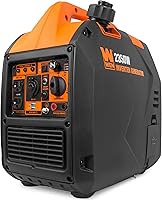
The WEN DF480iX supplies 4000 rated watts on gasoline or propane. It has four 120V receptacles, an RV receptacle, two USB ports, and a CO Watchdog sensor that shuts it down if dangerous carbon monoxide levels are detected.
Choose it for quieter operation and portable electronics; skip it if your plan needs 5000 continuous watts.
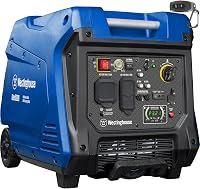
The Westinghouse WGen3600DFcv supplies 3600 rated watts on gasoline or 3240 on propane. It has household, RV-ready, and 30 amp outlets, plus automatic low-oil and CO shutdown.
It suits a smaller essential-load plan; skip it if several large appliances must run together.
The DuroMax XP5500HX runs on gasoline or propane and includes two 120V GFCI household outlets and a 120/240V 30 amp twist-lock outlet. Choose it when its output and outlet setup match your plan; skip it if weight or a smaller load plan makes this capacity unnecessary.
The WEN GN5600 runs on gasoline and supplies 4500 running watts. It has two household outlets, an RV-ready 120V 30 amp outlet, and a transfer-switch-ready 120V 30 amp outlet.
Its 4.3 gallon tank provides up to 12.5 hours of run time at half load. Choose it for those outlet options; skip it if you need 5000 continuous watts or dual-fuel operation.
Before you choose, compare the running output and outlet ratings with your appliance requirements. A peak watt figure alone doesn’t mean a generator can continuously power a 5000 watt load.
How should you set up and manage loads safely?
Operate a portable generator outdoors and away from doors, windows, and vents, following its manual and CPSC guidance. Carbon monoxide is dangerous, and a CO sensor does not make indoor operation safe.
Place the generator on a stable, dry surface. Use properly rated outdoor extension cords, keep them dry, and route them away from walkways.
See how far a generator should be from the house for placement guidance, and how to choose a generator extension cord for cord ratings and length.
Before each use, follow the manual’s checks for fuel, oil, and connections. Start with essential loads, then connect appliances one at a time.
Keep track of what is running so you don’t accidentally add a large load during a motor startup.
What common mistakes should you avoid?
Don’t plan around peak watts, ignore motor surges, or connect more equipment than the running rating allows. Those mistakes can cause an overload or prevent an appliance from starting.
Avoid these shortcuts:
- Assuming a 5000 peak watt label means 5000 running watts
- Adding appliance ratings without allowing for startup surges
- Running high-draw appliances together without checking their combined load
- Connecting a generator to home wiring without a properly installed transfer switch
- Using indoor-rated or undersized cords outside
- Treating CO shutdown as permission to run a generator in an enclosed space
If the generator overloads or an appliance won’t start, disconnect nonessential equipment and check the manuals before trying again.
What can a 5000 watt generator run, and which should you choose?
A 5000 watt generator can run a chosen group of essentials, but the answer depends on the rated running output, startup surges, and outlet setup. Add the appliance loads, leave room for motors to start, and don’t mistake peak watts for continuous capacity.
Choose the WEN DF480iX for lighter loads and dual-fuel operation. Its inverter power also suits portable electronics.
Pick the Westinghouse for a smaller dual-fuel plan, the DuroMax when its higher output and 120/240V outlet fit your backup needs, or the WEN GN5600 for its 4500 running watts and transfer-switch-ready outlet. If you need 5000 continuous watts, compare models by that rating in our generator watt-size guide.
Frequently asked questions
Can a 5000 watt generator run a whole house?
Usually, it can power selected essentials, but not every appliance in a whole house at once. Central air, electric cooking, and electric water heating can use most or all of the available capacity.
Add the running watts of the loads you need and account for motor startup before choosing a generator.
Can a 5000 watt generator run a refrigerator and freezer?
Often, but check both appliances’ running watts and startup demands along with every other connected load. Compressors need extra power when they start, even though they cycle on and off.
Leave room for that surge and check the appliance and generator manuals if you can’t find the required figures.
Can a 5000 watt generator run central air conditioning?
It depends on the air conditioner’s electrical needs and startup demand. Many central air systems need more capacity than a generator in this range can provide, while a smaller window unit may use less.
Check the unit’s nameplate and ask a qualified electrician about a hardwired system.
Is a 5000 watt generator enough for a sump pump?
It may run a sump pump with a limited set of other loads, but the pump’s startup watts matter. Check its label or manual, then add its running demand and startup surge to the loads you plan to operate.
For a closer estimate, see our sump pump generator sizing guide.