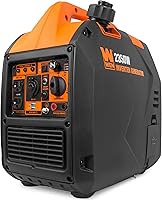
Portable Generators for Home Use: A Buyer's Guide
A portable generator for home use should match the appliances you need during an outage and their starting watts. Add up running watts, check the largest startup load, then choose a model with the right outlets and fuel for your plan.
On this page (10 sections)
- What should a portable generator for home use power?
- How do you calculate the generator size for your home?
- Which portable generator type fits home backup?
- What features matter for a home generator?
- Which generator examples fit different home plans?
- How should you connect a portable generator to your home?
- Where should you place a generator during an outage?
- Should you choose gasoline or propane?
- What should you do before the next outage?
- How do you choose the right portable generator for home use?
A portable generator for home use should match the appliances you need during an outage and their starting watts. Add the running watts for items you plan to use at the same time, check the largest startup demand, then choose a generator with the right output, outlets and fuel.
For some households, that means powering a refrigerator, a few lights and device chargers. Others may want a well pump, sump pump, furnace controls or more circuits, which calls for a larger power plan and a safe connection designed by a licensed electrician.
Start by listing the essentials you want to keep running. Our guide to how many watts you need to run a house can help you turn that list into a power target.
What should a portable generator for home use power?
A home generator should cover the loads you will run together, including the extra power some appliances need to start. Pick the loads first, then compare their watt needs with the generator's running and peak output.
Create a short outage list. Separate essentials from items that can wait, and be realistic about what you will use at the same time.
| Outage priority | Examples | What to check |
|---|---|---|
| Keep food cold | Refrigerator or freezer | Running and starting watts |
| Protect the home | Sump pump or well pump | Motor startup demand and operating schedule |
| Keep key systems usable | Furnace controls or a window air conditioner | Electrical requirements and connection plan |
| Stay connected | Phone chargers, router, lights | Combined running watts and outlet access |
| Add comfort | Television or small appliances | Whether they can run without exceeding capacity |
Appliance labels and manuals are the best place to start. A motor's startup demand can be higher than its running demand, so include both when the manufacturer provides them.
Avoid assuming that a generator's largest advertised watt number is available continuously. Running watts describe ongoing output; peak or starting watts describe short-term startup capacity.
See starting watts vs running watts for a clearer explanation.
How do you calculate the generator size for your home?
Choose a size by adding the running watts of the loads you plan to operate at once, then comparing the highest startup demand with the generator's peak output. Leave a practical margin so every appliance is not running at the generator's limit.
- List the appliances you consider essential.
- Find each appliance's running and starting watts in its manual or on its label.
- Add the running watts for the appliances that will operate at the same time.
- Identify the largest startup load and check whether it can start while the other selected items are running.
- Revisit the plan if the loads exceed either generator limit.
Some appliances are hard to estimate from a label alone. Ask the appliance maker or a qualified electrician if you cannot identify the required power.
A large starting load may affect what else you can run at that moment. For example, you may need to stagger use instead of starting a pump while several other appliances are already on.
For examples by output class, see what a 5000 watt generator can run. That guide can help you picture a smaller group of loads, but your own appliance requirements should drive the final choice.
What does a refrigerator need from a generator?
A refrigerator needs enough power for both its normal operation and its startup surge. Check the appliance label or manual, since refrigerator size and design affect its electrical needs.
If you plan to run a refrigerator with lights, chargers or a pump, include those items in the same load plan. Our guide to choosing a generator for a refrigerator covers the sizing details.
Will the generator run a pump or furnace?
A pump or furnace may need more startup power than its normal running load, and some systems connect to household wiring. Check the system documentation and have a licensed electrician plan any connection to hardwired equipment.
Use our guides to sump pump generator sizing, well pump generator sizing and whether a portable generator can run a furnace to consider those loads.
Which portable generator type fits home backup?
Choose an open-frame generator for higher output and household-style outlets, or an inverter model when lower noise, portability or sensitive electronics are stronger priorities. A dual-fuel model adds a choice of gasoline or propane, but its output may differ by fuel.
| Type | Often suits | Trade-offs to check |
|---|---|---|
| Open-frame portable | Larger loads and home backup plans | Size, weight, noise and storage |
| Inverter portable | Smaller loads, electronics and lower noise needs | Available running watts and outlet mix |
| Dual fuel | Buyers who want gasoline and propane options | Running watts and runtime on each fuel |
| Portable with transfer-switch-ready outlet | A planned connection through suitable equipment | Electrician's assessment and correct connection equipment |
These are broad categories, not guarantees about a particular model. Compare the actual output, outlets, weight and fuel details for the unit you are considering.
The difference between portable and standby systems also matters. Read portable vs standby generators if you are deciding whether a movable generator fits your outage plan.
What features matter for a home generator?
Prioritize the outlet and safety features your plan requires, then compare fuel, starting method, runtime and mobility. A feature is useful only when it supports the loads you intend to power.
- Outlets: Match outlet type and voltage to the equipment or connection plan. Do not use adapters to improvise a household wiring connection.
- Fuel: Gasoline and propane have different storage needs and may produce different output on the same dual-fuel generator.
- Runtime: Check how long a model can run under the stated conditions, then plan fuel around your expected load.
- Starting method: Recoil, electric and remote start options affect how you start the unit, not how much power it can supply.
- Portability: Check weight, wheels, handles and storage space before buying. A generator that is difficult to move may not fit your setup.
- Carbon monoxide protection: A sensor or shutoff feature is not a reason to run the generator indoors. Keep it outdoors and follow the manual.
- Noise: Compare the manufacturer's stated noise information and consider where the unit will sit outdoors.
Also consider how you will maintain and store the generator between outages. Follow its manual for fuel, oil, inspection and storage instructions.
Which generator examples fit different home plans?
These four models cover different output and use cases, from a compact inverter for a limited set of loads to a larger dual-fuel unit. Compare the stated running watts and outlets with your own load plan before deciding.
Westinghouse 12500W Dual Fuel Home Backup
The Westinghouse 12500W Dual Fuel Home Backup provides 9,500 running watts on gasoline or 8,500 on propane. Its outlets include an L14-30R transfer-switch-ready receptacle and a 14-50R outlet.
The model has remote, electric and recoil start, plus a digital display for voltage, frequency and lifetime hours. Westinghouse states that it can run for up to 12 hours on its 6.6-gallon gasoline tank.
Consider it for a larger load plan that needs more output than a mid-size portable model offers. Its 457 cc engine and 27.2 x 26.1 x 26.5 in dimensions make storage and movement worth planning in advance.
Westinghouse iGen4500 5000W Inverter
The Westinghouse iGen4500 5000W Inverter is a gasoline inverter with 3,900 rated watts and 5,000 peak watts. It has a household duplex outlet, an RV-ready outlet, two USB outlets, and an LED display for fuel level, output and remaining runtime.
Westinghouse states that it can run for up to 18 hours on its 3.4-gallon tank and that noise can be as low as 52 dBA. It has electric, remote and recoil starting, plus a telescoping handle.
Consider it when inverter output and a lower-noise design matter, and your selected loads fit within 3,900 rated watts. Its gasoline-only fuel supply and output may make it less suitable for a larger household load plan.
Champion 4000W Dual Fuel RV Inverter
The Champion 4000W Dual Fuel RV Inverter provides 3,000 running watts on gasoline or 2,700 on propane, with 4,000 starting watts. It has a TT-30R outlet, a household duplex outlet and a 12V outlet.
Champion says it can run for up to 10 hours on gasoline or up to 25 hours on propane at a 25% load. The unit weighs 51.8 lb and includes a CO Shield carbon monoxide auto shutoff system.
Consider it for a limited set of essentials or an RV-oriented setup, not as a substitute for checking whole-home loads. Its running output is lower on propane than on gasoline.
Westinghouse 6500W Dual Fuel Home Backup
This Westinghouse dual-fuel generator supplies 5,300 running watts on gasoline or 4,800 on propane. Its outlets include an RV-ready TT-30R and a transfer-switch-ready L14-30R.
Its 4.7-gallon gasoline tank has a fuel gauge, and the stated runtime is up to 14.5 hours. It also has a CO sensor with automatic shutdown.
Consider it for a moderate load plan where the output on your chosen fuel covers your selected appliances. Check that the outlet arrangement suits your electrician-approved connection plan.
How should you connect a portable generator to your home?
Have a licensed electrician choose and install the proper connection equipment if you want to power household circuits. Never connect a generator by plugging it into a home wall outlet.
A transfer switch or other approved connection can isolate the home from utility power. The electrician can assess your electrical panel, generator outlet and intended circuits, then explain how to use the setup safely.
Do not improvise wiring, remove covers or make a cord that can energize exposed prongs. For ordinary appliances, use suitable outdoor-rated extension cords and follow both the generator and appliance manuals.
Our generator extension cord guide explains how to choose cords for direct appliance connections. A cord does not replace an electrician-designed connection to household circuits.
Where should you place a generator during an outage?
Place a portable generator outdoors and well away from doors, windows and vents, following the generator manual and current CPSC guidance. Never run it in a house, garage, basement, shed or other enclosed or partly enclosed space.
Keep it on a dry, stable surface and protect it from rain as the manual directs. Do not place it under an open window or near an air intake where exhaust could enter the home.
Carbon monoxide is an odorless gas that can cause sudden illness or death. A built-in CO sensor does not make indoor operation safe.
Read how far a generator should be from the house before choosing an operating location. Follow the model's instructions for grounding, refueling, maintenance and shutdown.
Should you choose gasoline or propane?
Choose fuel based on availability, storage and the generator's output on that fuel. Dual-fuel capability gives you a choice, but a model may provide fewer running watts on propane.
Gasoline is familiar and widely sold, but it needs safe storage and can require attention between outages. Propane can be stored in suitable cylinders, but you need compatible equipment and enough fuel for the expected runtime.
Check how the manufacturer states runtime and load conditions. A runtime figure at a light load does not promise the same number of hours when several appliances are connected.
For a closer comparison of storage, runtime and cold starts, read propane vs gas generators.
What should you do before the next outage?
Prepare a written load, fuel and safety plan before you need the generator. Test your plan by checking manuals and connection details, not by running equipment indoors or improvising electrical connections.
- List the appliances you want to use and their running and starting watts.
- Confirm the generator's running output on your chosen fuel.
- Decide which loads can run together and which can wait.
- Arrange an electrician-approved connection if you plan to power household circuits.
- Choose an outdoor location away from openings and air intakes.
- Store fuel and maintain the unit as the manufacturer directs.
- Keep the manual and any required cords accessible.
The plan should be simple enough for another household member to follow. Make sure everyone knows where the generator belongs and how to keep it outdoors.
How do you choose the right portable generator for home use?
Choose the generator whose running watts, startup capacity, outlets and fuel match your essential loads. A small inverter can suit a short list of appliances, while a larger dual-fuel model can support a broader plan when its output and connection options fit.
Start with your appliance list, then compare the generator's output on the fuel you expect to use. If you want to power household circuits or hardwired equipment, ask a licensed electrician to design the connection and confirm the plan.
For the next step, use our guide to choosing a generator to compare watts, fuel and features against your outage priorities.
Frequently asked questions
What size portable generator do I need for home use?
Choose a generator from the appliances you plan to run at the same time. Add their running watts, then check the largest starting-watt demand, since motors can need extra power at startup.
If you want to run several large appliances or central systems, ask an electrician to review your plan.
Can a portable generator power a whole house?
Some portable generators can power many household circuits, but a portable model does not automatically run every appliance in a house. Your required loads, generator output, connection method and electrical setup all matter.
Have a licensed electrician assess any connection to household wiring.
Can I run a generator in my garage during an outage?
No. Run a portable generator outdoors, away from doors, windows and vents, and follow the generator manual and current safety guidance.
Carbon monoxide can build up indoors or enter the home, even when a garage door is open.
Should I choose a dual-fuel generator for home backup?
A dual-fuel generator gives you a choice between gasoline and propane, which can help if one fuel is hard to get. Compare the running watts on each fuel, how you plan to store fuel, and the fuel-specific runtime before choosing.
Can I connect a portable generator to a home outlet?
Do not plug a generator into a household outlet to power home wiring. Ask a licensed electrician about an approved transfer switch or other suitable connection, and use the generator only as directed by its manual.