Westinghouse vs Predator Generators: Which to Buy? (November 2026)
Pick Westinghouse when you want a dual fuel whole home backup or a quiet inverter for an RV. Predator generators trade that inverter choice and remote start for simpler gas-only open frames at the budget end.
On this page (8 sections)
- Westinghouse vs Predator generators: which brand fits your job?
- Fuel type decides more than brand
- Inverter power for electronics and RVs
- Start method and daily convenience
- Output and load planning for a home outage
- Noise, weight and where the unit lives
- Who should buy which?
- Verdict: Westinghouse vs Predator generators
Pick Westinghouse when you want a dual fuel whole home backup or a quiet inverter for an RV. Predator generators suit buyers who want a plain gas-only open frame with high wattage and no extra electronics.
In this Westinghouse vs Predator generators comparison, the brand question really comes down to three things: fuel type, inverter power and remote start.
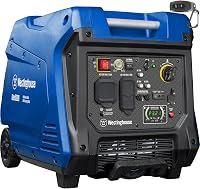
Westinghouse sells both ends of the range. The 12500W Home Backup is a dual fuel open frame built for a house, and the iGen5000 is a quiet inverter for travel trailers.
Predator leans toward open frame units that run on gasoline, so the choice narrows quickly once you know your job.

 Best for RV and sensitive electronics
Westinghouse iGen5000 5000W Inverter
Westinghouse vs Predator generators: which brand fits your job?
Westinghouse fits better when your plan includes propane or clean inverter power. Predator fits when a gas-only open frame with high wattage is all you need.
The two brands overlap on open frame units. The bigger split is that Westinghouse sells inverters alongside its open frames, and several Westinghouse models are dual fuel.
That matters for a home backup plan that might outlast a gasoline run.
Predator's catalog is narrower in this comparison. Its generators are built around the open frame shape, so there's less choice if you want something quiet enough for a campsite.
| Feature | Westinghouse 12500W Home Backup | Westinghouse iGen5000 Inverter | DuroMax XP13000EH | Honda EU2200i |
|---|---|---|---|---|
| Peak watts | 12500 (gas) | 5000 | 13000 (gas) | 2200 |
| Running watts | 9500 (gas) | 3900 | 10500 (gas) | 1800 |
| Fuel | Gas or propane | Gasoline | Gas or propane | Gasoline |
| Start | Remote key fob | Remote key fob | Electric | Recoil |
| Noise | Not published here | As low as 52 dBA | Not published here | 48 to 57 dB(A) |
That table is the short version. The sections below unpack each row so you can match a generator to your house, your trailer or your campsite.
The brand comparison matters less than the shape of the unit, so read each section against the job you have in mind.
Fuel type decides more than brand
A dual fuel generator keeps running when the gas station is closed. That's the strongest argument for Westinghouse over a gas-only Predator in an outage.
The Westinghouse 12500W Home Backup runs on gasoline or propane. On gasoline it delivers 9500 running watts and 12500 peak watts.
On propane it drops to 8500 running and 11200 peak, which is normal for propane because the fuel carries less energy per gallon.
Propane also stores without going stale. A full tank on the patio is there months later, while gasoline needs rotation and a stabilizer.
If your outage plan includes a spare propane tank, dual fuel is the feature that matters most.
The Westinghouse iGen5000 runs on gasoline only. So does the Honda EU2200i.
For an RV weekend, that's fine. For a multi-day home outage, a dual fuel open frame is the more resilient pick.
If you're comparing dual fuel units across brands, our Westinghouse vs DuroMax generator breakdown looks at how the two handle propane loads and outlet layouts.
What the propane wattage drop means in practice
The 12500W Home Backup loses about 1000 running watts when you switch to propane. Plan your circuit list around the propane figures if propane is your primary fuel, because that's the number the unit will hold for hours.
The 8500 running watts still cover a fridge, freezer, furnace blower, lights and a few outlets. The gap opens up when you add a well pump or a window air conditioner.
Write the propane running watts on the panel list and size the load to that, not to the gasoline peak.
Dual fuel also means the front facing switch lets you change fuel type in seconds on units that offer it. That's handy when a gasoline can runs dry mid outage and the propane tank is already connected.
Inverter power for electronics and RVs
Choose an inverter if you'll run laptops, TVs or a travel trailer. An open frame generator is built for motors and appliances, and its power isn't as clean.
The Westinghouse iGen5000 is rated at less than 3% THD. That's the number to look for when you plan to plug in sensitive electronics.
It also has an RV ready TT-30R 30 amp outlet, so a travel trailer connects without an adapter.
Its 5000 peak and 3900 rated watts cover a trailer's lights, fridge and a modest air conditioner. The parallel capability lets you add a second unit later if your loads grow.
That matters for a trailer owner who starts small and later adds a second air conditioner or a larger fridge.
The 12500W Home Backup is an open frame unit. It's built to feed a transfer switch and run a furnace, well pump or refrigerator bank.
It isn't the right tool for a campsite where quiet matters.
Predator's open frame lineup sits on the same side of that line. For a tent or a trailer in a quiet campground, the inverter is the better match.
For a house panel, the open frame wins.
Our best Westinghouse inverter generator roundup covers the quieter models in more detail if clean power is your main goal.
Start method and daily convenience
A remote key fob is the convenience feature that separates these models. It matters most on a dark, rainy night when you don't want to pull a cord.
The Westinghouse 12500W Home Backup comes with a remote start key fob plus electric and recoil start. The iGen5000 also includes a remote key fob with electric and recoil start and an auto choke.
That's a lot of convenience at both ends of the range.
The Honda EU2200i uses a recoil starter. It's light enough at 46.5 lb that pulling the cord is a small task, and its My Generator app adds remote monitoring and a wireless stop through Bluetooth.
That app also sends service reminders, which helps a camper keep up with oil changes over a season of trips.
The DuroMax XP13000EH has electric start but no key fob. You walk up and press the button.
That's fine for a unit that stays in one spot, less handy if the generator sits behind the house.
If you want a small inverter you can start from your phone, the Honda is the one in this group with app control. If you want a remote fob on a bigger unit, the Westinghouse pair both deliver it.
The fob runs the start and stop from a distance, so you can fire the unit up without standing in the weather.
Output and load planning for a home outage
Match running watts to what you need on at once, not to the peak figure. The peak number only covers motor startup for a few seconds.
The Westinghouse 12500W Home Backup's 9500 running watts on gasoline cover a typical essential circuit panel: fridge, freezer, furnace blower, lights and a few outlets. Add a well pump or central air and you need to plan load by load.
The DuroMax XP13000EH tops this group on paper with 10500 running watts on gasoline. That's the pick if your panel includes larger motor loads.
It also has a 50 amp transfer switch ready outlet and 100% copper windings. The copper windings are worth noting because copper conducts heat better than aluminum, which the brand says extends the life of the unit.
The iGen5000's 3900 rated watts are for a trailer or a few essentials, not a house panel. Plan each circuit before you buy so you don't overload the unit on the first night of an outage.
Peak vs running watts in plain terms
Peak watts are the short burst a generator can supply when a motor starts. A fridge compressor or a furnace blower draws several times its running load for a second or two.
Running watts are what the unit can hold for hours.
The 12500W Home Backup's 9500 running watts are the number to plan around. Its 12500 peak figure gives headroom for motor startup.
The same logic applies to the DuroMax: 10500 running and 13000 peak. Pick the unit whose running watts clear your steady load, and let the peak figure absorb the startup spikes.
Our DuroMax vs DuroStar generator comparison shows how those two brands split their wattage across similar models if you're weighing an open frame.
Noise, weight and where the unit lives
Inverter units are quieter and lighter; open frames are heavier and louder. Pick the shape around where the generator will sit most of the year.
The iGen5000 runs as low as 52 dBA and weighs 104.7 lb. It has a wheel kit and a telescoping handle, so one person can move it around a driveway or campsite.
Economy mode varies the engine speed to match the load, which keeps the noise down and stretches the fuel.
The Honda EU2200i is the lightest at 46.5 lb and runs at 48 to 57 dB(A). It's the easiest to lift into a truck bed or carry to a tent pad.
Its 121cc engine and up to 8.1 hours of run time suit a night at a campsite without a refuel.
The Westinghouse 12500W Home Backup is an open frame unit on wheels with a lift bracket. It's built to stay put near a transfer switch inlet rather than travel.
The DuroMax XP13000EH is heavier still at 234 lb and sits on no-flat tires. Its all metal frame has no plastic parts on the power panel, which suits a unit left outdoors through a storm season.
A dual fuel open frame near the house is a permanent fixture. An inverter is the one you take on trips.
Decide which of those two lives you need before you compare wattage. Noise is the deciding factor for anyone who camps near other people, and weight is the deciding factor for anyone who loads the unit into a vehicle alone.
Who should buy which?
Buy Westinghouse for a dual fuel home backup or a quiet inverter. Buy Predator if a simple gas-only open frame at a lower budget tier is enough for your job.
Pick the Westinghouse 12500W Home Backup if you have a house panel
This is the pick for an outage plan that might run several days. Dual fuel means a propane tank can keep it going when gasoline runs out.
Remote start and transfer switch ready outlets simplify the hookup. It's a heavy open frame, so plan a spot near the inlet and leave it there.
The 6.6 gallon tank runs up to 12 hours, which covers a long night without a refuel.
Pick the Westinghouse iGen5000 for an RV or sensitive gear
This is the inverter pick for a travel trailer or a home office on backup. Under 3% THD protects electronics, the TT-30R outlet fits an RV cord, and 52 dBA won't annoy the next campsite.
The 3.4 gallon tank runs up to 18 hours in economy mode. The trade is lower wattage, so it won't run a house panel.
Pick the DuroMax XP13000EH for the highest output here
If your loads are large motors and you want dual fuel without a remote fob, the XP13000EH leads on running watts. It's the heaviest unit in this comparison, so treat it as a fixed installation.
Its CO sensor and low oil shutdown add a layer of safety for a unit that runs unattended.
Pick the Honda EU2200i for quiet camping
For tent camping and small loads, the Honda is the lightest and quietest. Its CO-MINDER shuts the unit down when carbon monoxide rises, which is a real safety feature at a campsite.
The app adds remote monitoring and stop. It's too small for a home backup.
If you're also weighing another budget brand against Westinghouse, the Champion generator vs Westinghouse generator comparison covers that matchup.
Verdict: Westinghouse vs Predator generators
Westinghouse wins for most home and RV buyers because it offers dual fuel and inverter choices. Predator is a reasonable pick when a gas-only open frame with high wattage and a lower budget tier is your whole brief.
For a house, the Westinghouse 12500W Home Backup is the clear overall pick in this comparison. It pairs dual fuel with remote start and transfer switch ready outlets.
For a trailer or sensitive electronics, the iGen5000 is the better fit than any open frame.
Predator doesn't have an inverter in this matchup to match the iGen5000, and its open frames don't add dual fuel. That leaves the Westinghouse pair covering both jobs.
If your only need is raw wattage on gasoline and cost leads every other factor, a Predator open frame is still worth a look.
Our scoring weighs specs and features against what the buyer is shopping for. The Westinghouse 12500W Home Backup scores 9, the iGen5000 scores 8.9, the DuroMax scores 8.2 and the Honda scores 9.7 as a specialist camping unit.
The top pick for most readers here is the 12500W Home Backup.
Frequently asked questions
Is Westinghouse better than Predator for a whole home outage?
Westinghouse offers dual fuel open frames like the 12500W model with remote start and transfer switch ready outlets. Predator also makes high wattage open frames, but Westinghouse's dual fuel and remote start options suit a home backup plan more directly.
Does Predator make inverter generators?
Predator's line is known for gas-only open frame units rather than the quiet inverter type Westinghouse sells. If clean, low-noise power matters for electronics or an RV, an inverter like the iGen5000 is the safer fit.
Can I run a Westinghouse generator on propane?
Some Westinghouse models are dual fuel. The 12500W Home Backup runs on gasoline or propane, while the iGen5000 inverter runs on gasoline only.
Check the model's fuel type before you plan around a propane tank.
How much generator do I need for an RV air conditioner?
An RV air conditioner usually needs a soft start or a generator with enough running watts to handle the startup surge. The iGen5000's 3900 rated watts and RV ready outlet cover most travel trailer loads, but check your AC's startup draw first.
Which brand is quieter, Westinghouse or Predator?
Westinghouse publishes noise figures for its inverters, with the iGen5000 as low as 52 dBA. Predator open frame units are louder by design.
For campsites and shared spaces, the inverter is the better pick.
Are Westinghouse generators good for sensitive electronics?
The Westinghouse iGen5000 runs at less than 3% THD, which the brand says suits LCD and plasma TVs, laptops and tablets. Open frame units are a better match for motors and appliances than for delicate electronics.