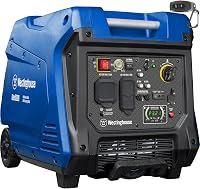
Westinghouse vs WEN Inverter Generators: Which Is Better? (November 2026)
For most homeowners, the Westinghouse iGen4500 wins because it runs an RV air conditioner and home essentials on 3900 rated watts. The WEN 2350W is the better pick when you want a 39 lb generator you can carry and store easily.
On this page (12 sections)
- Westinghouse vs WEN inverter generator: the quick verdict
- The two generators side by side
- How much power do you actually need?
- Which has the better outlets for your gear?
- Noise: which generator is quieter at camp?
- Fuel use and run time compared
- Portability and storage: 39 lb vs 104.7 lb
- Start method and daily convenience
- Price tier, warranty and brand support
- Who should buy the Westinghouse iGen4500?
- Who should buy the WEN 2350W?
- Final verdict: which inverter generator wins?
For most homeowners, the Westinghouse iGen4500 wins because it runs an RV air conditioner and home essentials on 3900 rated watts. The WEN 2350W is the better pick when you want a 39 lb generator you can carry and store easily.
That gap in output is the heart of the westinghouse vs wen inverter generator decision. One model powers a travel trailer or a few household circuits.
The other is sized for tents, tailgates and small electronics.


Westinghouse vs WEN inverter generator: the quick verdict
The Westinghouse iGen4500 is the better generator for most buyers, and the WEN 2350W is the better choice for light, portable use. Pick the Westinghouse if you need to run an RV air conditioner, a fridge or several home devices at once.
The Westinghouse puts out 5000 peak watts and 3900 rated watts from a 224cc four-stroke engine. The WEN produces 2350 surge watts and 1900 rated watts from a 79cc engine.
Rated watts are the number that matters for continuous loads, and the Westinghouse more than doubles the WEN's running capacity.
The WEN's advantage is weight. At 39 pounds, it is light enough for one person to carry from a car trunk to a campsite.
The Westinghouse weighs 104.7 pounds, so it rolls on its wheel kit and handle rather than lifting.
Your choice comes down to what you need to power and how far you have to move it.
The two generators side by side
The table shows the specs that decide most purchases: output, weight, outlets, noise and run time. Read across each row to see where one model pulls ahead.
| Feature | Westinghouse iGen4500 | WEN 2350W |
|---|---|---|
| Peak watts | 5000 | 2350 |
| Rated watts | 3900 | 1900 |
| Engine | 224cc four-stroke | 79cc four-stroke |
| Weight | 104.7 lb | 39 lb |
| RV outlet | TT-30R 30A | None |
| Household outlets | Two 5-20R 120V | Two 5-20R 120V |
| USB ports | Two | Two |
| DC outlet | None | One 12V 8.3A |
| Start | Remote key fob, electric, recoil | Recoil |
| Noise | As low as 52 dBA | About 51 dB at quarter load |
| Fuel tank | 3.4 gal | 1 gal |
| Run time | Up to 18 hr | Over 5.7 hr at half load |
| THD | Under 3% | Under 1.2% at full load |
| Warranty | 3-year limited | 2-year |
The table makes the trade clear. The Westinghouse offers more power and an RV outlet in a heavier, wheeled package.
The WEN offers low weight and a small footprint with limited output. Neither unit is a straight upgrade over the other, and the next sections explain each one.
How much power do you actually need?
The Westinghouse covers whole-home essentials and RV air conditioning, while the WEN covers lights, chargers and one small appliance. Match rated watts to the devices you plan to run at the same time.
The Westinghouse's 3900 rated watts can carry a 13,500 BTU RV air conditioner, a fridge, lights and a laptop together. That makes it useful during a power outage or at a campsite without hookups.
The WEN's 1900 rated watts handle a TV, router, phone chargers and a fan at once. A 1500W space heater fits too, but it leaves little room for anything else.
For backup power, think about what you cannot do without. A fridge and a few lights fit the WEN.
A fridge, a space heater and a microwave need the Westinghouse. Running near the limit also wears a generator faster and burns more fuel.
When the WEN's 1900 watts are enough
The WEN suits campers who charge phones, cameras and laptops and run a small fan or light. It also fits tailgates and hunting trips where a TV or sound system is the biggest load.
Skip the WEN for air conditioning or heating. Its 1900 rated watts won't start a typical RV air conditioner, and a space heater leaves almost no margin for other devices.
When the Westinghouse's 3900 watts make sense
The Westinghouse suits travel trailer owners, home backup and jobsites with several tools. Its 5000 peak watts help start motor-driven loads like an air conditioner or fridge compressor.
Choose it when one outlet needs to run more than a single device. The extra rated watts mean you can plug in the RV cord and still have household outlets free.
Which has the better outlets for your gear?
The Westinghouse wins on outlets for RVs and home use because it includes a TT-30R 30A RV receptacle. The WEN covers everyday 120V devices but adds no RV outlet.
The Westinghouse panel has two 5-20R 120V household outlets, an RV-ready TT-30R 30A outlet and two USB ports. You plug a travel trailer cord in directly without an adapter.
The WEN offers two three-prong 120V receptacles, one 12V 8.3A DC outlet and two 5V USB ports. The DC outlet can charge a car battery or run 12V accessories.
Both units include USB ports for phones and tablets. The Westinghouse's RV outlet is the bigger practical difference because it saves you from carrying a 30A adapter and keeps the household outlets free.
Outlets for home backup and camping
During an outage, the Westinghouse's two 120V household outlets plus its higher rated watts let you run a fridge and a few lights. At camp, its TT-30R outlet plugs a travel trailer cord in directly, which is the cleanest setup for an RV air conditioner.
The WEN's two 120V outlets can run a fridge on its own or a few small devices. Its DC outlet can run 12V camping gear without an adapter.
For a tent or small camper without a 30A system, that mix is enough.
Noise: which generator is quieter at camp?
The two are close on noise, with WEN claiming about 51 decibels at quarter load and Westinghouse rating its unit as low as 52 dBA. Load level and distance from the generator change what you hear more than the brand.
The WEN's figure is measured at quarter load. At higher loads, its small engine runs faster and gets louder.
The Westinghouse's 52 dBA figure is its lowest, likely at low load with Economy Mode varying engine speed to match demand, which keeps noise and fuel use down.
Neither generator is silent. A unit running near its rated limit will be audible across a campsite, whatever the brand.
Many campsites and parks set quiet-hour rules, so check the limit before you book, and run either unit away from tents and living areas.
Fuel use and run time compared
The Westinghouse runs far longer on a tank because it holds 3.4 gallons against the WEN's 1 gallon. Run time matters most for overnight backup and multi-day trips.
Westinghouse says the iGen4500 can run up to 18 hours on a 3.4-gallon tank in economy mode. The WEN runs over 5.7 hours at half load on its 1-gallon tank.
The Westinghouse's longer run time comes from both a bigger tank and Economy Mode, which adjusts engine speed to the load.
If you plan to run a generator overnight during an outage, the Westinghouse means fewer refuels. The WEN's smaller tank means more frequent trips to the gas can, though it is easy to refuel and store.
Fuel shutoff and storage
The WEN's fuel shutoff helps when the generator will sit for weeks or months. It lets the engine burn the remaining fuel in the carburetor before shutdown, which helps prevent gum and blockages from stale fuel.
For long storage on the Westinghouse, follow its manual for draining or stabilizing fuel before you put it away.
Portability and storage: 39 lb vs 104.7 lb
The WEN is far easier to carry and store, while the Westinghouse rolls on wheels and needs more floor space. Weight decides who can move each unit alone.
The WEN weighs 39 pounds and measures 17.3 x 11.5 x 17.5 inches. One person can lift it into a truck bed, carry it up steps or store it on a shelf.
The Westinghouse weighs 104.7 pounds and measures 24.5 x 17.5 x 20 inches. Its wheel kit and telescoping handle let you roll it, but lifting it into a vehicle takes two people.
For apartment storage or a small garage, the WEN's small footprint is a real advantage. The Westinghouse takes up more floor space and needs room to roll, so a patio, garage corner or shed floor suits it better than a closet.
A generator you dread moving is one you won't use when the power goes out.
Moving and setup
The WEN needs no assembly beyond adding oil and fuel. You lift it, set it down and start it with the recoil pull.
The Westinghouse arrives with a wheel and handle kit and a key fob for remote start, and its electric start means no bending to pull a cord in cold or wet weather. Between trips, drain the WEN's fuel or run it dry with the fuel shutoff; keep the Westinghouse on dry, level floor space and follow its manual for fuel care.
Start method and daily convenience
The Westinghouse is easier to start day to day because it offers remote, electric and recoil starting. The WEN uses a recoil pull only.
The Westinghouse includes a key fob for remote start, plus push-button electric start and recoil backup. That range of options helps when the generator is far from the door or when you start it in the dark.
The WEN's recoil pull is simple and reliable, and it suits a small generator you carry to a campsite.
The Westinghouse's LED data center shows fuel level, power output, remaining run time, voltage and lifetime hours on a rotating display, which helps you plan refuels and track maintenance. On the WEN, checking fuel by sight is usually enough on a camping unit.
Remote start is a convenience, not a necessity. But if you start a generator often during storm season, the key fob saves a trip outside in bad weather.
Price tier, warranty and brand support
The Westinghouse sits in a higher price tier and backs its unit with a 3-year limited warranty; the WEN is a budget-friendly unit with a 2-year warranty. The extra cost buys more power, an RV outlet and remote start.
Westinghouse backs the iGen4500 with 3-year limited service, labor and parts coverage and a nationwide service network. The WEN carries a 2-year warranty.
A longer term covers more repair cycles on a generator you run often, and the nationwide network helps if you need repairs away from home.
Both brands build inverter generators that produce clean power for sensitive electronics. The Westinghouse rates its output at less than 3% THD, and the WEN limits total harmonic distortion to under 0.3% at no load and under 1.2% at full load.
Both are safe for laptops, TVs and phones.
Which brand is right for you?
The Westinghouse brand fits buyers who want a generator for home backup or RV use and value warranty length. The WEN brand fits budget-conscious campers who want a light, quiet generator for small loads.
For a deeper look at the Westinghouse lineup, our guide to the best Westinghouse inverter generators compares the models. If you want a rival brand in the same class, see the best Champion inverter generators.
And if you are still weighing brands, our Westinghouse vs DuroMax generator comparison covers another option.
Who should buy the Westinghouse iGen4500?
Buy the Westinghouse iGen4500 if you need to run an RV air conditioner, a fridge or several home devices during an outage. Its 3900 rated watts and TT-30R outlet make it the stronger choice for whole-home essentials and travel trailers.
The iGen4500 suits travel trailer owners who want to plug the RV cord in directly. It also fits homeowners who want one generator that can keep a fridge and a few lights running for hours.
Its 18-hour run time means fewer refuels overnight, and the remote start helps when the generator sits outside in bad weather.
Skip it if you need to carry the generator up stairs or store it in a small space. At 104.7 pounds it is a rolling unit, not a portable one you lift alone.
Our full Westinghouse iGen4500 review covers its features in more depth.
Who should buy the WEN 2350W?
Buy the WEN 2350W if you want a light, quiet generator for camping, tailgating or charging devices. At 39 pounds it is easy to carry and store, and its 1900 rated watts cover phones, laptops, a TV and a small fan.
The WEN suits tent campers, overlanders and anyone who needs backup for a few small devices. Its fuel shutoff helps with long storage between trips, and the price is lower than the Westinghouse.
Skip it if you need to run an air conditioner, a space heater alongside other loads or a whole RV panel. If you mainly camp and rarely face outages, the WEN's lower weight and price make it the practical choice.
Final verdict: which inverter generator wins?
The Westinghouse iGen4500 wins overall for most readers, and the WEN 2350W wins for light, portable use. The Westinghouse's 3900 rated watts, RV outlet and 18-hour run time make it the better generator for home backup and travel trailers.
In this westinghouse vs wen inverter generator comparison, the choice comes down to what you need to power. If an RV air conditioner or a fridge is on your list, choose the Westinghouse.
If you want a generator you can lift with one hand for camping, choose the WEN.
The WEN is not a weak unit. It is a focused one built for small loads and easy transport.
The Westinghouse is the broader tool, with more power and a longer warranty. Decide by your largest load and your storage space.
Those two answers point to one model more clearly than any spec sheet.
If you are still comparing brands in this class, the best Westinghouse inverter generators guide and the best Champion inverter generators roundup show what else is available. Our Westinghouse vs DuroMax generator comparison covers a third brand if you want more options.
Frequently asked questions
Which is better, a Westinghouse or WEN inverter generator?
The Westinghouse iGen4500 is better for running an RV air conditioner and home backup loads because it delivers 3900 rated watts through a 30A RV outlet. The WEN 2350W suits camping and light charging because it weighs just 39 lb and still runs a phone, laptop and small appliance.
Can the Westinghouse iGen4500 run an RV air conditioner?
Yes, most 13,500 BTU RV air conditioners start within its 5000 peak watts and run on its 3900 rated watts. It also has a TT-30R 30A outlet built for travel trailers, so you plug in the RV cord without an adapter.
How loud is a WEN inverter generator compared with a Westinghouse?
WEN says its 2350W model runs at about 51 decibels at quarter load, while Westinghouse rates the iGen4500 as low as 52 dBA. Both are conversation-level, but load, distance and surroundings change what you hear at a campsite or in a yard.
Can I run a space heater on the WEN 2350W?
A 1500W space heater uses about 1500 running watts, which fits the WEN's 1900 rated watts but leaves little headroom for anything else. For a heater plus a fridge or microwave, choose the Westinghouse with its 3900 rated watts.
Which inverter generator is easier to move?
The WEN 2350W weighs 39 lb and is the easier one to lift into a truck bed or carry up steps. The Westinghouse iGen4500 weighs 104.7 lb, but its wheel kit and telescoping handle let one person roll it across a driveway or patio.