What Size Generator Do You Need to Run a Refrigerator?
A 2,000-watt running inverter generator may run a household refrigerator if its running and starting wattage fit the generator’s ratings. Check the refrigerator’s label or manual before choosing.
On this page (7 sections)
- What size generator do you need to run a refrigerator?
- How do you find your refrigerator’s wattage?
- Can a 2,000-watt generator run a refrigerator?
- Is a 2,550-watt generator enough for a refrigerator?
- Would a 4,000-watt generator run more appliances?
- What should you consider besides watts?
- How do you choose a generator for a refrigerator?
A 2,000-watt running inverter generator may run a household refrigerator if its running and starting wattage fit the generator’s ratings. Check the refrigerator’s label or manual before choosing, since the compressor may need a brief surge to start.
A refrigerator’s size alone doesn’t tell you how much generator power it needs. The model, compressor, and any other appliances you want to run all affect the right size.
What size generator do you need to run a refrigerator?
For many household refrigerators, compare models with about 2,000 running watts and enough starting watts for the compressor surge. Your refrigerator’s manual or electrical label is the best source for its actual requirements.
Running watts tell you how much power an appliance needs while operating. Starting watts cover the short surge some motors need when they start; our guide to starting watts versus running watts explains how to use both figures.
Don’t size a generator from its peak number alone. Confirm that its rated running output covers the refrigerator, then check that its surge output can handle startup.
How do you find your refrigerator’s wattage?
Find the refrigerator’s model number and check its manual or the manufacturer’s specifications for running and starting power. If the label gives volts and amps instead, multiply them to estimate watts: volts × amps = watts.
That calculation estimates the electrical load shown on the label. Startup demand may be higher, so check the manual or contact the refrigerator maker if it doesn’t give a starting figure.
If you want to power more than the refrigerator, add the other appliances’ running watts and account for their starting surges. Our guide to how many watts you need to run a house can help you set priorities for an outage.
Can a 2,000-watt generator run a refrigerator?
A generator with about 2,000 running watts may work if its surge rating can start the refrigerator’s compressor. Check the refrigerator’s figures against both generator ratings before relying on it during an outage.
The WEN Super Quiet 2350W Inverter has 1,900 rated watts and 2,350 surge watts, so it may suit a refrigerator whose demands fit within those limits.
At 39 pounds, the WEN is a portable option if you need to move it into storage between outages. Its surge rating won’t cover a refrigerator with a higher startup demand.
Is a 2,550-watt generator enough for a refrigerator?
A generator with 1,900 running watts and 2,550 peak watts may handle a refrigerator if both the appliance’s running load and compressor startup fit its ratings. A larger peak number doesn’t increase its running output.
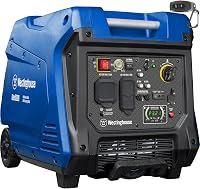
The Westinghouse iGen2550 Inverter has a 120V duplex outlet and is described for home backup of essentials such as a refrigerator.
If you expect to add lights or electronics, include their demand in your calculation. They draw power alongside the refrigerator, and the generator still needs room for compressor startup.
Would a 4,000-watt generator run more appliances?
A generator with 3,000 running watts can offer more room for combined loads, but check its rating against the appliances you want to power. The running rating, not the starting figure, is the relevant limit for appliances operating together.
The Champion 4000W RV Inverter provides 4,000 starting watts and 3,000 running watts. Its 120V household duplex outlet can power compatible essentials.
The Champion weighs 48.1 pounds. Add each appliance’s running watts and consider which motors might start while the refrigerator is running.
What should you consider besides watts?
Choose a generator that meets the refrigerator’s power needs and gives you a practical way to connect it. Check the generator manual for approved outlets, cords, grounding instructions, and use limits.
For a portable model, plan to operate it outdoors, far from doors, windows, and vents. Follow the generator manual and CPSC guidance on generator placement to reduce carbon monoxide risk.
Use a properly rated cord if the refrigerator’s location requires one, and follow both appliance and generator instructions. Our guide to generator extension cords covers cord selection without changing how you power a home circuit.
How do you choose a generator for a refrigerator?
Choose by matching the refrigerator’s running watts and startup demand to the generator’s running and surge ratings. Then add the loads you want to use at the same time and leave capacity for the compressor to start.
For a refrigerator that fits within 1,900 running and 2,350 surge watts, the WEN may be enough. The Westinghouse also provides 1,900 running watts, while the Champion’s 3,000 running watts offer more room for additional compatible loads.
If you’re choosing a generator for broader household use, compare options in our portable generators for home use guide. For a sump pump that may run during the same outage, see what size generator you need for a sump pump.
Frequently asked questions
How many watts does a refrigerator need from a generator?
It depends on the refrigerator. Check its label or manual for running watts and starting watts, since the compressor can need a brief surge to start.
Choose a generator whose running output covers the refrigerator and whose surge output can handle startup.
Can a 2000-watt generator run a refrigerator?
Often, yes, if the refrigerator’s startup demand fits within the generator’s surge rating and its running demand fits within the rated output. Check both numbers before connecting it, and allow for other appliances that may run at the same time.
Should I use an inverter generator for a refrigerator?
An inverter generator can suit a refrigerator when its running and starting wattage ratings are high enough. Inverter models can provide clean power for sensitive electronics, but check the refrigerator manual and generator instructions for compatibility and connection guidance.
Can I run a refrigerator and freezer on one generator?
You may be able to run both if the generator covers their combined running watts and the startup surge when either compressor starts. Check each appliance’s label or manual, and leave room for other loads rather than sizing to the running total alone.