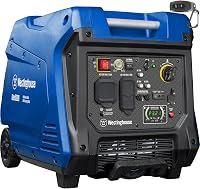
Champion 4000-Watt Dual Fuel Inverter Generator Review: Worth It? (October 2026)
The Champion 4000 watt generator with dual-fuel operation suits RV trips and camping when you want gasoline or propane. It delivers up to 3000 running watts on gasoline or 2700 on propane, with a TT-30R outlet.
On this page (12 sections)
- What does the Champion 4000 watt generator offer?
- How should you choose a Champion 4000 watt generator?
- What separates the Champion 4000W models?
- Is the gas-only Champion 4000W a better fit?
- Is the Champion 4500W worth carrying?
- What can the Champion 4000 power?
- Does the TT-30R outlet make it suitable for an RV?
- Which fuel should you use, and what runtime should you expect?
- How should you set up and care for the generator?
- What common mistakes should you avoid?
- Who should buy the Champion 4000W Dual Fuel RV Inverter?
- Related generator guides
The Champion 4000 watt generator with dual-fuel operation is a practical fit for RV trips and camping if you want the option to use gasoline or propane. It provides 3000 running watts on gasoline or 2700 on propane, and includes a 120V 25A TT-30R outlet.
The choice comes down to your fuel plan, carrying needs and actual electrical loads. The gasoline-only 4000W sibling is lighter, while the 4500W dual-fuel model provides more running output at a much higher weight.
What does the Champion 4000 watt generator offer?
The dual-fuel Champion produces 4000 starting watts and up to 3000 running watts on gasoline. On propane, it provides 2700 running watts, so size your load plan for the fuel you expect to use.
Champion 4000W Dual Fuel RV Inverter: Best for dual-fuel RV trips

- 3000 running watts on gasoline
- 2700 running watts on propane
- 51.8 lb
- 120V 25A TT-30R outlet
A dual-fuel inverter with a TT-30R RV outlet, household outlets and CO Shield auto shutoff. Its running output is lower on propane than gasoline.
Pros
- Runs on gasoline or propane
- TT-30R RV outlet
- CO Shield carbon monoxide auto shutoff
- 3-year limited warranty and lifetime technical support
Cons
- Propane output is 2700 running watts
- Parallel kit is sold separately
Its outlets include a TT-30R RV connection, a 120V 20A household duplex outlet, a 12V automotive-style outlet and parallel outlets. Champion specifies clean electricity under 3% THD and CO Shield carbon monoxide auto shutoff.
At 51.8 lb, it is portable for a generator in this output class, though it is still a two-handed lift for many people. Champion rates it at 64 dBA from 23 feet and gives runtime estimates of up to 10 hours on gasoline or 25 hours on propane at 25% load.
Who should consider the dual-fuel Champion 4000 watt generator?
Choose it if you want an RV outlet, fuel flexibility and enough output for a planned set of moderate loads. It suits campers and RV owners who can store either gasoline or a propane tank and want to choose based on trip logistics.
Skip it if your appliances need more than 3000 running watts on gasoline or 2700 on propane, or if you need a generator for unattended, automatic household backup. Starting watts handle brief startup demand, not continuous use.
How should you choose a Champion 4000 watt generator?
Choose by matching running watts, starting demand, fuel and portability to your use. A model's headline wattage alone cannot tell you whether it will run your appliances together.
Write down the running watts of each device you want to power. For anything with a motor, such as an air conditioner or pump, check its startup requirement as well.
Then plan which items can run at the same time. The guide to starting watts versus running watts explains how those figures differ.
If you are choosing for an RV, confirm the RV's connection and the appliances you expect to use. A TT-30R outlet helps with a compatible RV connection, but it does not increase the generator's available power.
See what size generator you need for a 30 amp RV for a load-planning checklist.
For camping, consider how often you will lift the unit and how you will store it. Also consider whether propane is available where you travel.
If your priority is keeping household essentials running, start with a load list and compare the generator's output against it. The portable generator guide for home use covers the limits of portable backup.
What separates the Champion 4000W models?
The dual-fuel 4000W model adds propane capability; the gas-only sibling weighs less, and the 4500W model delivers more running output. Choose based on which trade-off matters in your setup.
| Model | Running watts | Fuel | Weight | Notable detail |
|---|---|---|---|---|
| Champion 4000W Dual Fuel RV Inverter | 3000 gasoline; 2700 propane | Gasoline and propane | 51.8 lb | TT-30R outlet; CO Shield auto shutoff |
| Champion 4000W RV Inverter | 3000 | Gasoline | 48.1 lb | Champion does not recommend it for emergency home backup |
| Champion 4500W Dual Fuel Inverter | 3500 gasoline; 3150 propane | Gasoline and propane | 99.2 lb | Electric start and Intelligauge |
The two 4000W models share a 64 dBA rating from 23 feet, 4000 starting watts and a TT-30R outlet. Their fuel options and weights distinguish them.
The 4500W version adds 500 running watts on either fuel compared with the dual-fuel 4000W. It is also 47.4 lb heavier, so the added output is a poor trade if you need to lift the generator often.
Is the gas-only Champion 4000W a better fit?
Pick the gas-only model if you want the lightest option and do not need propane. It weighs 48.1 lb and supplies 3000 running watts on gasoline.
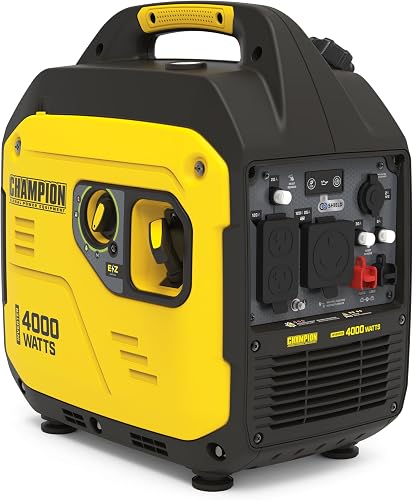
Champion 4000W RV Inverter: Best for lighter gas-only carry
- 3000 running watts
- 48.1 lb
- 120V 25A TT-30R outlet
- Gasoline
A lighter gasoline-only sibling with 3000 running watts and a 64 dBA sound level. Champion says it isn't recommended for emergency home backup.
Pros
- Lighter than the dual-fuel model
- TT-30R RV outlet
- CO Shield carbon monoxide auto shutoff
- 3-year limited warranty and lifetime technical support
Cons
- Gasoline only
- Not recommended by Champion for emergency home backup
It shares the dual-fuel model's TT-30R outlet, household duplex outlet, 12V outlet and CO Shield auto shutoff. The 3.7 lb difference is modest, so do not let that small saving outweigh fuel flexibility if propane matters to you.
Champion says this model is not recommended for emergency home backup. It is a better match for camping, tailgating and other uses consistent with the manufacturer's guidance.
Is the Champion 4500W worth carrying?
The 4500W model suits buyers who need more output and can manage a 99.2 lb generator. It provides 3500 running watts on gasoline or 3150 on propane, with electric start and an Intelligauge that shows voltage, frequency and operating hours.
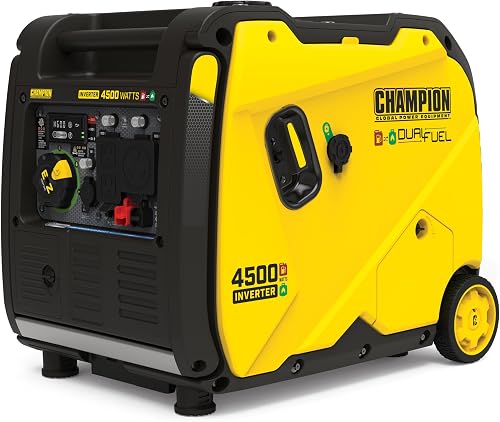
Champion 4500W Dual Fuel Inverter: Best for higher running loads
- 3500 running watts on gasoline
- 3150 running watts on propane
- 99.2 lb
- Electric start
A dual-fuel inverter with more running output, electric start and an Intelligauge. Its 99.2 lb weight makes it less suited to frequent lifting.
Pros
- More running watts on both fuels
- Electric start
- Intelligauge shows voltage, frequency and hours
- 3-year limited warranty and lifetime technical support
Cons
- 99.2 lb weight
- Parallel kit is sold separately
It also offers dual-fuel operation and CO Shield. Champion rates it at 61 dBA from 23 feet, with up to 14 hours of gasoline runtime or 21 hours on propane at 25% load.
Choose it when your load calculation exceeds the 4000W model's running output but still fits the 4500W model's limits. If moving or loading the generator is a regular task, the extra weight may make the smaller 4000W the more useful choice.
What can the Champion 4000 power?
It can run devices whose combined demand stays within its fuel-specific running output. Build a load list before you connect equipment, and leave room for appliances that draw more power when starting.
For home use, identify the essentials you want to keep on and add their running loads. Then consider whether they may start at the same time and whether the largest startup demand fits the available starting watts.
A single motor appliance can change the plan. For example, if a refrigerator or pump will start while other devices are running, account for that temporary surge.
Do not treat the generator's starting-watt figure as extra continuous capacity. For a broader estimate, see how many watts you need to run a house.
Does the TT-30R outlet make it suitable for an RV?
The 120V 25A TT-30R outlet supports a compatible RV connection, but the power available to the RV remains limited by the generator's output. Check your air conditioner and other appliances before relying on them together.
The dual-fuel Champion also has parallel outlets. An optional kit can connect it with another Parallel Ready Champion inverter or power station for more power and longer runtime.
The kit is sold separately, so include its cost and storage needs in your plan. Confirm compatibility and connection steps in Champion's instructions before combining units.
Which fuel should you use, and what runtime should you expect?
Choose gasoline if its higher running output matters; choose propane if tank-based storage and its longer rated runtime at 25% load suit your trip. Champion rates this model for up to 10 hours on gasoline or 25 hours on propane at that load.
The gasoline tank holds 1.54 gallons, and the propane estimate uses a 20 lb tank. Actual runtime changes with the load and operating conditions, so do not plan a long outing around the maximum estimate alone.
Switching to propane lowers available running output by 300 watts. Recheck your appliance list when changing fuels, especially if you expect several devices to run together.
Our propane versus gas generator guide covers storage and fuel trade-offs.
How should you set up and care for the generator?
Set it up outdoors on a stable, open surface and follow the manual for oil, fuel and startup steps. Keep it far from doors, windows and vents so exhaust cannot enter the home or RV.
The dual-fuel model includes engine oil, an oil funnel and a propane hose. Add oil as directed before starting, inspect connections, and use only the fuel and setup steps specified in Champion's instructions.
Plan the cable route before starting the generator. Use cords suited to the load and outdoor use, and protect connections from water.
Avoid overloading one outlet. The guide to choosing a generator extension cord explains what to check.
For routine care, follow the manual's schedule for oil checks and changes, and air-filter care and storage. Let the unit cool before handling fuel, keep fuel away from heat, and store the generator clean and dry.
CO Shield adds an automatic shutoff feature, but it does not replace safe placement or supervision.
Review how far a generator should be from the house before choosing an operating location.
What common mistakes should you avoid?
The most common sizing mistake is using starting watts as though they were available all the time. Base your plan on running watts, then check startup demand for motors and other appliances.
Another mistake is planning around propane runtime without accounting for its lower output. The longer runtime estimate applies at 25% load, and propane operation offers 2700 running watts rather than 3000.
Do not assume an RV outlet means every RV appliance can run at once. Check the RV's air conditioner and other loads.
Then allow for startup demand and the generator's total capacity. Also avoid treating a carbon monoxide shutoff system as permission to run the unit close to occupied spaces.
Who should buy the Champion 4000W Dual Fuel RV Inverter?
Buy the Champion 4000 watt generator with dual-fuel capability if you want gasoline and propane options, an RV outlet and up to 3000 running watts on gasoline. Choose the gas-only sibling when lower weight matters more than fuel choice, or the 4500W model when your load plan needs more output and you can handle its added weight.
If your needs are still uncertain, compare models in our guide to the best 4000 watt generators and use your appliance list to rule out units that fall short.
Related generator guides
- Best Champion inverter generators
- Champion vs Generac portable generators
- What size generator do you need for a 30 amp RV?
Frequently asked questions
How many running watts does the Champion 4000 dual fuel generator provide?
The dual-fuel Champion provides 3000 running watts on gasoline and 2700 on propane, with 4000 starting watts on either fuel. Compare running watts with the devices you plan to power, and account for startup demand from motors.
Don't treat the 4000 starting-watt figure as continuous output.
Can the Champion 4000 dual fuel inverter run an RV air conditioner?
It has a 120V 25A TT-30R outlet for RV use, but whether it can start and run your air conditioner depends on that appliance's running and starting demands. Check the unit's labels or manual, include other loads you may use at the same time, and compare them with the generator's fuel-specific running watts.
How long does the Champion 4000 dual fuel generator run?
Champion rates it for up to 10 hours on gasoline and up to 25 hours on propane at 25% load. Runtime varies with load and operating conditions, so treat those figures as rated examples rather than a promise for every trip.
Check fuel levels and follow the manual during operation.
Is the Champion 4000 dual fuel inverter suitable for home backup?
It can supply selected essentials within its running-watt limits, but it isn't a whole-house generator. Make a load list before choosing, and follow the manual and local rules for safe outdoor operation and connections.
Never run a portable generator indoors or in an enclosed space.