10 Best Portable Generators (October 2026)
The best portable generators include the Westinghouse 12500W Dual Fuel Home Backup for larger home backup, the Westinghouse iGen4500 5000W Inverter for quieter RV power, and the Champion 4000W Dual Fuel RV Inverter for lighter RV travel.
On this page (14 sections)
- How do these best portable generators fit different needs?
- Which best portable generator fits your loads and fuel?
- 1. Westinghouse 12500W Dual Fuel Home Backup: Best for larger home backup
- 2. Westinghouse iGen4500 5000W Inverter: Best for quieter RV power
- 3. Champion 4000W Dual Fuel RV Inverter: Best for lighter RV travel
- 4. WEN 3600W Dual Fuel RV Inverter (DF360iX): Best for compact dual fuel
- 5. DuroMax XP13000HX 13000W Dual Fuel: Best for large backup setups
- 6. Westinghouse 6500W Dual Fuel Home Backup: Best for mid-size home loads
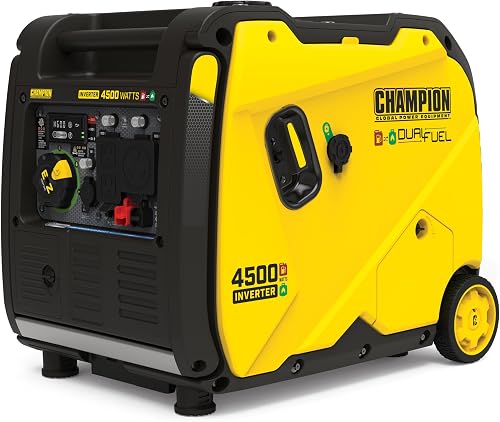
- 7. Champion 4500W Dual Fuel Inverter: Best for longer RV runtime
- 8. DuroStar DS13000MX 13000W Dual Fuel: Best for remote-start backup
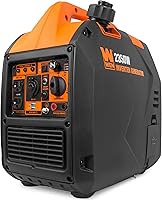
- 9. WEN Super Quiet 2350W Inverter: Best for small essential loads
- 10. BILT HARD 4500W Dual Fuel: Best for RV outlet flexibility
- How do you choose the best portable generator?
- Which best portable generator should you choose?
The best portable generator for most home backup plans is the Westinghouse 12500W Dual Fuel Home Backup, with up to 9500 running watts on gasoline and 8500 on propane. If you need power for an RV or a small load list, a lower-output inverter can be easier to move and use.
Start with the loads you actually plan to run. Check running and starting watts, fuel, outlet fit and safe placement before choosing a generator.
If you're planning home backup, read our portable generator guide for home use and guide to estimating household watts. RV owners can start with the requirements for a generator for a 30 amp RV.
Our picks at a glance
-
1
 Best for larger home backup
Westinghouse 12500W Dual Fuel Home Backup
9.0/10 our score
See it on Amazon -
2

-
3

- 4
 Check it
WEN 3600W Dual Fuel RV Inverter (DF360iX)
Best for compact dual fuel - 5
 Check it
DuroMax XP13000HX 13000W Dual Fuel
Best for large backup setups - 6
 Check it
Westinghouse 6500W Dual Fuel Home Backup
Best for mid-size home loads - 7
 Check it
Champion 4500W Dual Fuel Inverter
Best for longer RV runtime - 8
 Check it
DuroStar DS13000MX 13000W Dual Fuel
Best for remote-start backup - 9
 Check it
WEN Super Quiet 2350W Inverter
Best for small essential loads - 10
 Best for RV outlet flexibilityCheck it
How do these best portable generators fit different needs?
The picks cover home backup, RV power and smaller loads. We compared stated watt ratings, fuel options, start methods, outlet types, portability and safety features against those uses.
Running watts and startup capacity determine which loads a generator can support together. A peak watt figure alone doesn't tell you what it can power continuously.
See our guide to starting watts vs running watts before you build a load list.
Which best portable generator fits your loads and fuel?
The Westinghouse 12500W Dual Fuel Home Backup leads this roundup with a score of 9.0. For smaller loads, the lighter WEN 2350W inverter weighs 39 lb, while the RV-focused inverter picks add TT-30R outlets and, in several cases, propane operation.
| Product | Best for | Running watts | Fuel | Start | Our score |
|---|---|---|---|---|---|
| Westinghouse 12500W Dual Fuel Home Backup | larger home backup | 9500 gas, 8500 propane | Gasoline or propane | Remote, electric and recoil | 9.0 |
| Westinghouse iGen4500 5000W Inverter | quieter RV power | Gasoline | 8.9 | ||
| Champion 4000W Dual Fuel RV Inverter | lighter RV travel | 3000 gas, 2700 propane | Gasoline or propane | 8.8 | |
| WEN 3600W Dual Fuel RV Inverter (DF360iX) | compact dual fuel | Gasoline or propane | 8.7 | ||
| DuroMax XP13000HX 13000W Dual Fuel | large backup setups | Gasoline or propane | 8.6 | ||
| Westinghouse 6500W Dual Fuel Home Backup | mid-size home loads | 5300 gas, 4800 propane | Gasoline or propane | 8.5 | |
| Champion 4500W Dual Fuel Inverter | longer RV runtime | 3500 gas, 3150 propane | Gasoline or propane | 8.5 | |
| DuroStar DS13000MX 13000W Dual Fuel | remote-start backup | 10,500 | Gasoline or propane | 8.3 | |
| WEN Super Quiet 2350W Inverter | small essential loads | Gasoline | 8.2 | ||
| BILT HARD 4500W Dual Fuel | RV outlet flexibility | Gasoline or propane | 7.9 |
1. Westinghouse 12500W Dual Fuel Home Backup: Best for larger home backup
Westinghouse 12500W Dual Fuel Home Backup: Best for larger home backup
- 9500 running watts on gasoline
- 8500 running watts on propane
- Remote, electric and recoil start
- L14-30R and 14-50R outlets
High output, dual-fuel operation and 30A and 50A outlets suit a planned home backup setup. Confirm that the generator's fuel-specific output and outlet match your loads and connection plan.
Pros
- Gasoline and propane operation
- Remote start key fob included
- VFT display shows voltage and frequency
Cons
- Open-frame design takes more space than compact inverters
- Home connection needs compatible equipment installed by a qualified electrician
The Westinghouse 12500W Dual Fuel Home Backup delivers 9500 running watts on gasoline or 8500 on propane. It offers remote, electric and recoil starting, plus a VFT display for voltage, frequency and lifetime hours.
Its outlet panel includes a 30A L14-30R and a 50A 14-50R, along with two household receptacles. The transfer-switch-ready outlets give you connection options, but home wiring requires compatible equipment installed by a qualified electrician.
Westinghouse states up to 12 hours of runtime on a full 6.6-gallon gasoline tank. The fuel gauge helps you check the tank, while the included key fob lets you start the generator remotely.
Choose it for a home backup plan that needs substantial output and more than one outlet type. Skip it if your needs are a few small devices, or if you don't have room for a larger open-frame generator.
Before setup, add each appliance's running watts and note the largest starting demand. Also decide where the generator will sit outdoors and how an approved connection will reach the equipment.
2. Westinghouse iGen4500 5000W Inverter: Best for quieter RV power
Westinghouse iGen4500 5000W Inverter: Best for quieter RV power
- 3900 rated watts
- Up to 18 hours on a 3.4-gallon tank
- TT-30R RV outlet
- Remote, electric and recoil start
A gasoline inverter with an RV-ready outlet, a rotating digital display and up to 18 hours of stated runtime. Its 104.7 lb weight and gasoline-only design make it a poor match if you need a light unit or propane.
Pros
- Up to 18 hours of stated runtime
- Remote start key fob included
- Under 3% THD
Cons
- Gasoline only
- 104.7 lb weight
The Westinghouse iGen4500 5000W Inverter is rated for 3900 watts and includes a TT-30R RV outlet. Its stated noise output is as low as 52 dBA, and the rotating display shows fuel level, power output, remaining runtime, voltage and lifetime hours.
This gasoline inverter has remote, electric and recoil start. Westinghouse states up to 18 hours on its 3.4-gallon tank; actual runtime changes with the connected load.
Pick it when your RV or home use calls for inverter power, a TT-30R outlet and a longer stated runtime. Its 104.7 lb weight makes it a poor choice for frequent lifting, and it doesn't offer propane operation.
3. Champion 4000W Dual Fuel RV Inverter: Best for lighter RV travel
Champion 4000W Dual Fuel RV Inverter: Best for lighter RV travel
- 3000 running watts on gasoline
- 2700 running watts on propane
- TT-30R RV outlet
- CO Shield auto shutoff
At 51.8 lb, this inverter offers two fuel choices, an RV receptacle and CO Shield automatic shutoff. It suits a smaller RV load plan, but can't match the running output of larger backup generators.
Pros
- Gasoline and propane operation
- RV-ready TT-30R outlet
- CO Shield auto shutoff system
Cons
- Recoil start
- Parallel kit sold separately
The Champion 4000W Dual Fuel RV Inverter weighs 51.8 lb and runs on gasoline or propane. It provides 3000 running watts on gasoline and 2700 on propane, with a TT-30R RV outlet and a household duplex outlet.
Champion's CO Shield automatically shuts the generator down in unsafe conditions. The generator uses recoil start, and Champion states up to 10 hours on gasoline or 25 hours on propane under its stated load conditions.
This model suits RV users who want two fuel options in a lighter inverter. Skip it if your appliances need more running watts than it can supply, or if electric starting is a priority.
4. WEN 3600W Dual Fuel RV Inverter (DF360iX): Best for compact dual fuel
WEN 3600W Dual Fuel RV Inverter (DF360iX): Best for compact dual fuel
- 2900 rated watts on gasoline
- 2600 rated watts on propane
- 49 lb weight
- Watchdog CO shutdown sensor
This 49 lb inverter pairs gasoline or propane operation with a TT-30R outlet and CO shutdown sensor. Skip it if your load plan needs more than 2600 running watts when using propane.
Pros
- Dual-fuel operation
- Tool-free LPG quick connector
- Fuel shutoff feature
Cons
- Lower rated output on propane
- No electric start
The WEN 3600W Dual Fuel RV Inverter (DF360iX) weighs 49 lb and is rated at 2900 watts on gasoline or 2600 on propane. Its connections include a TT-30R RV receptacle, two 120V outlets, a 12V DC outlet and USB ports.
WEN's Watchdog CO sensor shuts the generator down if it detects dangerous carbon monoxide levels. A fuel-shutoff feature uses the remaining fuel in the carburetor before stopping, which WEN says helps limit buildup from stagnant fuel.
Choose it if you want a compact dual-fuel inverter and your planned loads fit its fuel-specific ratings. If you rely on propane, size your load around the lower output rather than the gasoline figure.
5. DuroMax XP13000HX 13000W Dual Fuel: Best for large backup setups
DuroMax XP13000HX 13000W Dual Fuel: Best for large backup setups
- 13,000 watts stated
- Gasoline or propane
- Push-button start
- 50A transfer switch-ready outlet
A 50A outlet, push-button start and gasoline or propane operation make this a candidate for a large home backup plan. At 245 lb, it needs a dedicated place to store it, and buyers should confirm its running-watt rating before choosing.
Pros
- Dual-fuel operation
- Push-button start
- Four GFCI household outlets
Cons
- 245 lb weight
- Running-watt rating not provided
The DuroMax XP13000HX 13000W Dual Fuel has 13,000 watts stated, push-button start and gasoline or propane operation. Its panel has four GFCI household outlets, a 30A outlet and a heavy-duty 50A outlet.
At 245 lb, this generator needs a planned storage and movement location. CO Alert detects carbon monoxide, but it doesn't replace safe outdoor placement or careful use.
The product information doesn't provide a running-watt figure. Confirm that rating before matching it to appliances or a transfer-switch plan, and don't size a generator from peak watts alone.
Choose this model only if its verified running output fits your loads and you can manage its weight. A smaller generator is more practical if you need to move it often or power only a few essentials.
6. Westinghouse 6500W Dual Fuel Home Backup: Best for mid-size home loads
Westinghouse 6500W Dual Fuel Home Backup: Best for mid-size home loads
- 5300 running watts on gasoline
- 4800 running watts on propane
- L14-30R and TT-30R outlets
- CO shutdown
This dual-fuel generator sits between compact inverters and the largest home backup models. Its 30A transfer-switch-ready outlet fits a compatible connection plan, but its output won't suit loads above its fuel-specific running rating.
Pros
- Gasoline and propane operation
- Up to 14.5 hours of runtime
- Automatic CO shutdown
Cons
- Less output than the 9500-running-watt pick
- 120/240V selector switch
The Westinghouse 6500W Dual Fuel Home Backup supplies 5300 running watts on gasoline or 4800 on propane. It has a household duplex outlet, an RV-ready TT-30R and a transfer-switch-ready L14-30R.
Westinghouse states up to 14.5 hours of runtime on a 4.7-gallon gasoline tank. Automatic low-oil and carbon monoxide shutdown add useful protections, and a selector switch supports 120/240V output.
This is a sensible step down from the larger home backup models if your load list fits its rating. It's a poor fit for a home plan that needs more output than it provides on your chosen fuel.
7. Champion 4500W Dual Fuel Inverter: Best for longer RV runtime
Champion 4500W Dual Fuel Inverter: Best for longer RV runtime
- 3500 running watts on gasoline
- 3150 running watts on propane
- 61 dBA stated noise level
- Electric start and CO Shield
This electric-start inverter offers more running output than the 3000-watt Champion and a TT-30R outlet for RV connection. At 99.2 lb, it's a poor fit if you'll carry the generator frequently.
Pros
- Electric start
- Gasoline and propane operation
- CO Shield auto shutoff
Cons
- 99.2 lb weight
- Parallel kit sold separately
The Champion 4500W Dual Fuel Inverter provides 3500 running watts on gasoline or 3150 on propane, electric start and a TT-30R RV outlet. Champion states a noise level of 61 dBA from 23 ft.
At 25% load, Champion states up to 14 hours of runtime on gasoline and 21 hours on propane. CO Shield provides automatic shutoff, and an optional parallel kit can connect the generator with another compatible Champion inverter.
Choose this model if you value electric start and longer stated runtime for an RV or a modest backup load list. At 99.2 lb, it's less practical to carry than the smaller inverter picks.
8. DuroStar DS13000MX 13000W Dual Fuel: Best for remote-start backup
DuroStar DS13000MX 13000W Dual Fuel: Best for remote-start backup
- 10,500 running watts
- Gasoline or propane
- Remote electric start
- 50A transfer switch-ready outlet
Remote electric start, dual-fuel operation and a 50A outlet suit a high-output home backup plan. It weighs 220 lb, so it isn't a good choice if you need to move your generator by hand often.
Pros
- Remote electric start
- Dual-fuel operation
- CO Alert feature
Cons
- 220 lb weight
- Confirm load needs and connection requirements
The DuroStar DS13000MX 13000W Dual Fuel is rated at 10,500 running watts and has remote electric start. It runs on gasoline or propane and includes a 50A transfer-switch-ready outlet.
This 220 lb generator is best for a fixed storage spot and a planned high-output backup setup. CO Alert detects dangerous carbon monoxide levels and shuts the unit down.
Choose it if its running output matches your loads and remote start matters. Confirm the transfer-switch connection with a qualified electrician before planning to power home circuits.
9. WEN Super Quiet 2350W Inverter: Best for small essential loads
WEN Super Quiet 2350W Inverter: Best for small essential loads
- 1900 rated watts
- 39 lb weight
- 51 dB at quarter load
- Fuel shutoff
A 39 lb gasoline inverter for charging devices or powering a small, carefully planned load list. Its 1900 rated watts make it unsuitable for whole-home backup or several high-draw appliances.
Pros
- 39 lb weight
- Fuel shutoff feature
- USB ports
Cons
- Gasoline only
- Limited rated output
The WEN Super Quiet 2350W Inverter is rated at 1900 watts and weighs 39 lb. It runs on gasoline and has two 120V receptacles, 12V DC output and USB ports.
WEN states 51 dB at quarter load and more than 5.7 hours of runtime at half load from its one-gallon tank. Its fuel-shutoff feature uses fuel remaining in the carburetor before the generator stops.
This compact choice suits device charging and a small, carefully selected load list. Skip it if you expect to power several appliances or want whole-home backup.
10. BILT HARD 4500W Dual Fuel: Best for RV outlet flexibility
BILT HARD 4500W Dual Fuel: Best for RV outlet flexibility
- 3500 rated watts on gasoline
- 3200 rated watts on propane
- 57.7 lb weight
- CO sensor auto shutdown
A TT-30R outlet, dual-fuel operation and CO sensor suit RV users who need more output than a small inverter. Its recoil start and 57.7 lb weight may not suit buyers who need push-button starting or frequent lifting.
Pros
- Gasoline and propane operation
- CO sensor auto shutdown
- Parallel capable
Cons
- Recoil start
- Parallel kit not included
The BILT HARD 4500W Dual Fuel is rated for 3500 watts on gasoline or 3200 on propane and weighs 57.7 lb. Its outlets include a TT-30R, a household duplex receptacle, USB ports and 12V DC output.
The stated noise level is 58 dBA at 23 ft, and a CO sensor automatically shuts the generator down during unsafe conditions. It's parallel capable, but the parallel kit is sold separately.
Consider it for RV use or modest backup needs when its output and plug types match your equipment. Recoil starting and the need to buy a separate parallel kit may rule it out if you want electric start or plan to expand capacity.
How do you choose the best portable generator?
Choose the best portable generator by matching its running watts, starting capacity, fuel and outlets to the loads you expect to power. A high peak watt number by itself doesn't tell you whether the generator can sustain those appliances.
Write down each appliance and check its running and starting requirements on its label or in its manual. Add the running watts for appliances that will run together, then make sure the generator can also handle the largest startup demand.
Leave room for loads that may cycle on while other equipment is already running. If your plan is for a house, our guide explains how many watts you need to run a house; for refrigeration, see what size generator a refrigerator needs.
Are running watts more important than peak watts for portable generators?
Running watts show how much power a generator can provide continuously, while peak or starting watts cover a brief startup demand. Compare your steady load with the running rating, then check whether the generator can handle the largest startup draw.
Use the ratings for the fuel you intend to use. Several dual-fuel models provide less running output on propane than on gasoline.
Should you choose gasoline, propane or dual fuel for a portable generator?
Dual fuel gives you a choice between gasoline and propane, though the watt output and runtime can vary by fuel. Consider which fuel you can store and supply safely, then compare the rating for that fuel with your load list.
A gasoline-only inverter can still be the right pick if its output, outlets and runtime fit your plans. Read our propane vs gas generator guide for a closer look at the fuel tradeoffs.
What outlets should you check on a portable generator?
Match the generator outlet to the appliance cord or approved connection equipment you plan to use. RV owners often need a TT-30R, while home backup may need a compatible transfer-switch connection.
A transfer-switch-ready outlet doesn't make it safe to connect a generator directly to home wiring. Never feed generator power into a wall outlet; have a qualified electrician install compatible equipment.
How should you set up and place a portable generator?
Set up a portable generator outdoors, away from doors, windows and vents, and follow the manual's instructions. Keep exhaust away from people and occupied spaces even if the generator has a carbon monoxide shutdown feature.
Before a power outage, choose a stable outdoor location and check that the cords or approved connection equipment will reach without blocking doors or paths. Our generator placement guide explains how to keep it safely away from a house.
If you use an extension cord, choose one rated for the generator's output and the connected load. Follow our guide to choosing a generator extension cord and the cord manufacturer's instructions.
What care helps a portable generator stay ready?
Follow the generator manual for oil, fuel, inspection and storage steps. Before using a unit for the first time, complete the required assembly and setup, check fluid levels as directed, and learn its start and shutdown process.
Use fresh, suitable fuel and store it safely according to the manual and local rules. If the generator has a fuel-shutoff feature, use it as directed; WEN says the feature on its inverter models uses remaining carburetor fuel before shutdown to help limit stagnant-fuel buildup.
Run through the startup process before an emergency so you can find the controls and check the outlet connections. Keep the manual with the generator and follow the manufacturer's maintenance schedule.
What mistakes should you avoid when buying or using a portable generator?
The most common sizing mistake is choosing by peak watts alone. Check running watts, startup demand and the rating for your chosen fuel before deciding what can run together.
Another mistake is assuming an outlet makes a connection compatible. Confirm the plug, voltage and amperage requirements for your appliance or transfer switch, and use a qualified electrician for a home connection.
Don't place a generator near an opening or use a CO sensor as a substitute for distance and outdoor operation. Finally, account for weight and storage before buying: a 220 or 245 lb model needs a different plan than a 39 lb inverter.
Which best portable generator should you choose?
Choose the Westinghouse 12500W if your home load plan needs high output, dual-fuel flexibility and multiple outlet types. Pick the iGen4500 for an inverter with an RV outlet and long stated gasoline runtime, or the WEN 2350W if you need to power only a small set of essentials.
For a lighter dual-fuel RV option, compare the Champion 4000W and WEN 3600W against your fuel-specific load needs. Before buying, confirm startup watts, outlet fit and a safe outdoor location, then see our best portable generators for a house guide for more home-focused choices.
Our top 3 picks at a glance
-
1
Best for larger home backup
Westinghouse 12500W Dual Fuel Home Backup
9.0/10 our score
See it on Amazon -
2
-
3
Frequently asked questions
What size portable generator do I need for my house?
Choose a generator by adding the running watts of the appliances you need and allowing for their starting watts. A refrigerator, sump pump and furnace can have different startup demands, so check their labels and manuals before selecting a generator.
Our guide to estimating household generator watts walks through that process.
Is an inverter generator better than an open-frame generator?
An inverter may be a better fit if you value a lower stated noise level, easier transport or clean power for electronics. Larger open-frame models in this roundup offer more output for a home backup plan.
Compare rated watts, outlets, fuel, size and your load list before choosing.
Can a portable generator power a refrigerator?
Yes, if the generator can cover the refrigerator's running and startup watts along with any other loads connected at the same time. Check the refrigerator label or manual and leave capacity for startup demand.
Can I connect a portable generator to my home's wiring?
A portable generator can supply home wiring through a compatible transfer switch installed by a qualified electrician. Never connect a generator directly to a wall outlet, and follow local requirements and the generator manual.
For outdoor placement, read how far a generator should be from the house.
Can I run a portable generator near an RV?
Use the generator outdoors and follow its manual and campground rules for placement. Keep it away from doors, windows and vents so exhaust can't enter occupied spaces.
Check your RV's power needs and plug type before choosing an inverter with a TT-30R outlet.